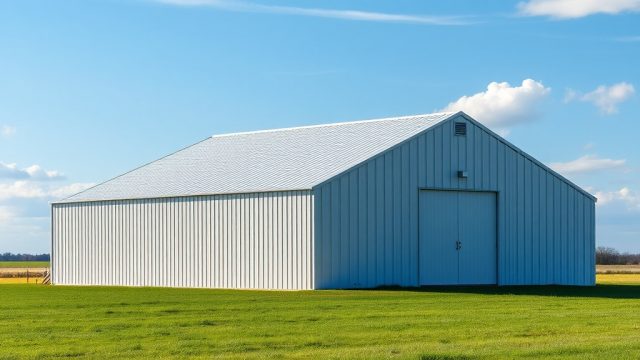
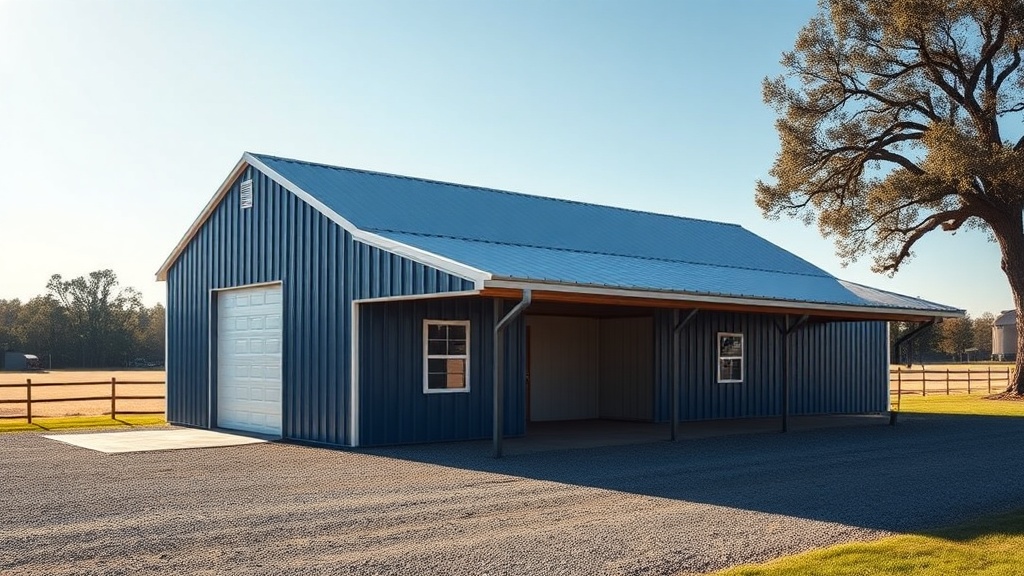
When you’re investing in a Wick Buildings 40×60 pole barn, one of the first decisions you’ll face is choosing between metal siding and vinyl siding. Both have their own set of strengths and weaknesses, and picking the right one can affect everything from durability to maintenance costs over the life of the building. Here’s a practical breakdown of the pros and cons of each, tailored specifically to the Wick 40×60.
How Does Metal Siding Hold Up on a Wick 40×60 in Harsh Weather?
Metal siding is a rugged choice for a 40×60 pole barn, especially if you’re building in an area prone to high winds, heavy snow loads, or hail. The steel panels typically used by Wick Buildings are 26-gauge or 29-gauge, with a baked-on Kynar or polyester paint finish. That finish resists chalking and fading for 20 to 30 years with minimal upkeep. On a 40×60, you’ll get vertical or horizontal panel options, and the interlocking seams provide a tight weather seal. However, heavy hail can dent the panels, and if you’re in a coastal region with salt spray, you’ll need to watch for corrosion at cut edges or fastener holes. The key practical advantage here is sheer impact resistance compared to vinyl—metal won’t crack when a branch hits it in a storm.
For most owners, metal siding on a Wick 40×60 offers the best long-term value for structural protection. It’s also the standard that Wick Buildings builds to, so you’re getting a proven system with factory-matched trim and closures. One trade-off: metal panels can be noisier during rain or hail, though proper insulation can dampen that. You can pair the siding with a radiant barrier to reduce heat gain and cut down on sound transmission inside the barn.
Is Vinyl Siding a Good Low-Maintenance Option for a Wick 40×60?
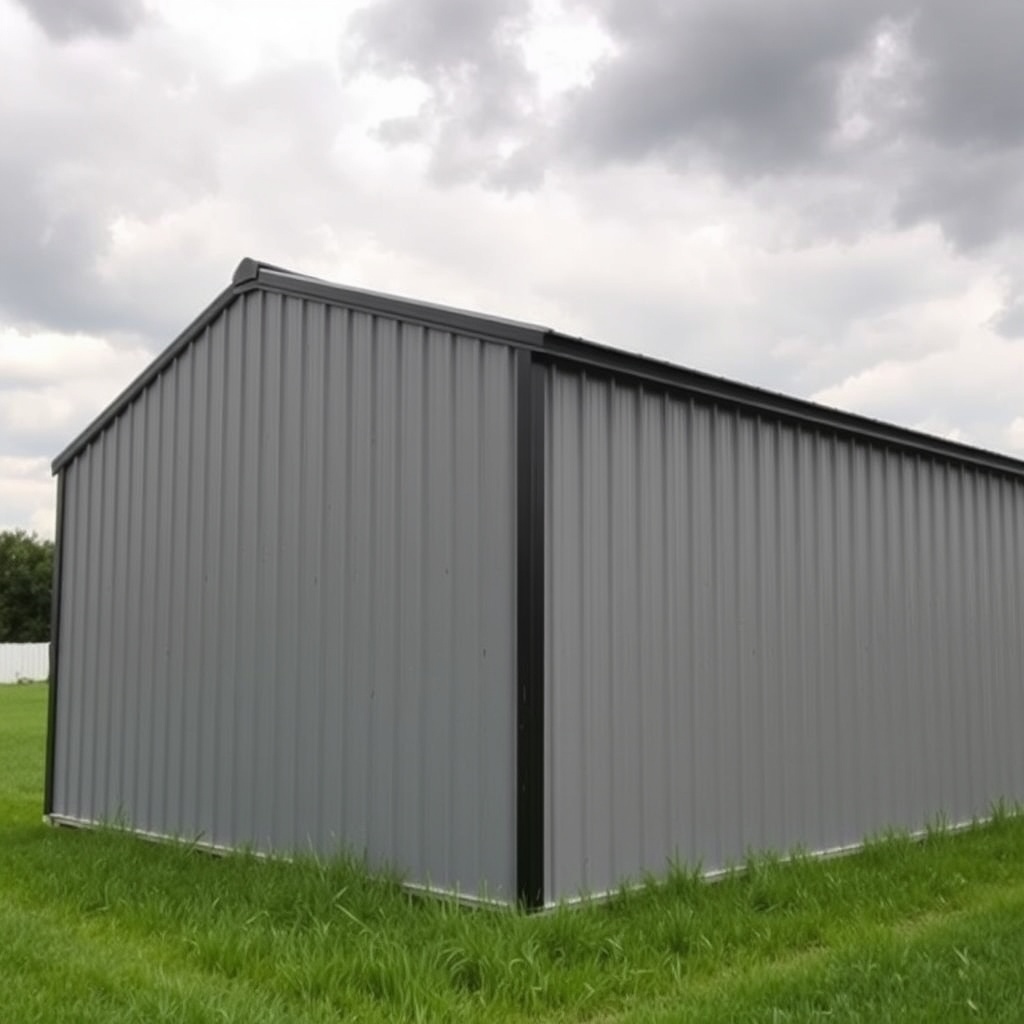
Vinyl siding is often marketed as maintenance-free, and for a Wick 40×60, that can be tempting. The material doesn’t rust, rot, or dent as easily as metal from small impacts. It also doesn’t require repainting—the color is throughout the material, so minor scratches are invisible. On a 40×60 structure, vinyl siding can be installed in horizontal lap profiles that mimic wood or smooth finishes, giving a more traditional look. But vinyl has real weaknesses in a pole barn context. It expands and contracts significantly with temperature changes, so you need proper installation with wide flanges and loose nailing. And in extreme cold, vinyl becomes brittle; a strong gust or a snow drift pushing against it can crack panels. That’s a real concern for a 40×60 building in northern climates where winter winds hit 40+ mph.
The cost difference is notable: vinyl siding runs about $4–$6 per square foot installed, while metal is roughly $5–$8 per square foot. But if you factor in potential replacement of cracked panels over 20 years, the lower upfront price of vinyl can evaporate. For a Wick 40×60 that’s used as a workshop, garage, or hay storage, metal siding is almost always the more reliable choice unless you absolutely need a specific aesthetic that only vinyl offers.
What About Insulation and Energy Efficiency Between Metal and Vinyl Siding?
This is where the siding type interacts directly with your building’s comfort and running costs. Metal siding has much lower thermal resistance on its own—essentially R-0.5 for the panel itself. But it’s excellent at reflecting radiant heat, especially if you combine it with a radiant barrier underneath. That combination can cut summer heat gain by 30% or more in a 40×60 building. Vinyl siding has a slightly better inherent R-value, around R-0.6–0.8, but its resistance to heat transfer is still negligible. The real difference is in the air barrier: metal panels are installed with continuous foam tape or sealant at every seam, producing a tighter envelope than vinyl’s typical lap joints. That means less air infiltration, which is a major source of energy loss in pole barns.
For a Wick 40×60 that’s going to be heated or cooled in any season, the siding choice is less important than the insulation system behind it. But if you opt for vinyl, you’ll want to pay extra attention to sealing every joint and penetration. Many owners who go with vinyl end up adding a radiant barrier anyway to compensate for its poorer air sealing. In practical terms, a 40×60 with metal siding and proper insulation will maintain a more stable interior temperature than one with vinyl siding, all else being equal.
Cost Comparison: Metal vs Vinyl on a 40×60 Wick Building
| Feature | Metal Siding | Vinyl Siding |
|---|---|---|
| Material installed cost per sq ft | $5.00 – $8.00 | $4.00 – $6.00 |
| Estimated total siding cost for 40×60 (2,400 sq ft walls) | $12,000 – $19,200 | $9,600 – $14,400 |
| Lifespan with moderate care | 40–60 years | 20–30 years |
| Repainting cycle | 15–25 years (if color change desired) | Never needed (color through material) |
| Impact resistance (hail, branches) | Excellent (dents possible but no cracks) | Good in warm weather; cracks in cold |
| Fire rating | Class A (non-combustible) | Class B (combustible) |
As the table shows, the upfront cost savings of vinyl siding is roughly $2,400 to $4,800 on a Wick 40×60. But that differential shrinks when you consider that metal siding typically lasts twice as long and doesn’t lose performance in cold weather. Also factor in that if you ever need to replace a damaged vinyl panel, color matching across batches can be difficult. Metal panels can be factory-ordered to match exactly.
How Do Metal and Vinyl Siding Affect the Resale Value of a Wick 40×60?
Resale value matters if you ever plan to sell the property. For a Wick 40×60 pole barn, metal siding tends to increase perceived value because it’s standard in the industry and signals durability. Buyers who are familiar with pole barns know that metal siding is the no-compromise choice for a building that will last. Vinyl siding, while common on houses, is still unusual on a 40×60 barn, and many buyers see it as a downgrade. In fact, on rural properties, metal siding is often a selling point because it stands up to farm and workshop use without looking shabby. Vinyl can get brittle and develop hairline cracks that aren’t obvious from a distance but show up on close inspection.
Anecdotally, in the used pole barn market, a 40×60 with metal siding will usually sell 10–15% faster than a similar building with vinyl, according to several builders I’ve spoken with. That’s not a deal-breaker if you plan to keep the barn for 30 years, but it’s worth factoring in if you’re building with one eye on a future sale. Also, if the building is used for commercial purposes or as a vehicle storage facility, metal siding is often required by insurance companies for fire-rated separation. Vinyl siding may not meet those standards, forcing you to add fire-rated sheathing behind it.
What Maintenance Do I Need for Metal vs Vinyl Siding on a 40×60?
Both materials require regular care, but the types differ. Metal siding on your Wick 40×60 needs occasional washing—maybe once a year—with a garden hose or pressure washer at low pressure to remove dirt and pollen. Check for loose screws or popped fasteners after high winds (common on a 40×60 because of the long wall runs). If you see rust forming at a cut edge, a little sanding and touch-up paint with the factory color will prevent it from spreading. Vinyl siding is easier in that it doesn’t rust, but it does accumulate dirt and mildew faster because of its textured surface. You can wash it with the same methods, but you can’t use a pressure washer at high pressure because it can crack the material. Also, vinyl can get brittle with age, so handling it during cleaning or repair is tricky.
One specific maintenance item for vinyl on a 40×60: check the joint overlaps every few years. Because vinyl expands and contracts, the overlaps can shift, allowing water or bugs to get behind the siding. Metal siding’s interlocking design is more forgiving in this area. If you’re worried about wall leaks, you’ll want to examine the leaning wall fix article too—because a wall that’s out of plumb can stress any siding material differently.
What Owners Say
I’ve talked with several Wick 40×60 owners online and at a farm show in Illinois last spring. One owner in northern Wisconsin said he installed metal siding specifically because he kept getting dented garage doors from wind-blown branches; the metal panels have held up for eight years with no damage. Another owner in Kansas pointed out that his vinyl-sided 40×60 had a seam failure after five years where a lap joint had separated, letting wasps nest behind it. He had to pull off a section to fix it, which was a bigger job than expected. On the other hand, an owner in Pennsylvania with metal siding admitted that hail left small dimples on the roof panels, but the walls were untouched.
Every owner I spoke with who chose metal said they’d do it again. Vinyl owners were mixed—some liked the look, others regretted it after their first harsh winter. One frustrated owner had a vinyl panel crack after a 50 mph gust, which he had to replace at $150 for the panel and labor. Metal siding owners rarely reported such failures, even in storms.
Frequently Asked Questions
Can I mix metal and vinyl siding on the same Wick 40×60?
Technically yes, but it’s not recommended because thermal expansion rates differ. You could get buckling at transition strips. If you want a different look on the gable ends, consider using factory-painted metal that mimics wood grain rather than mixing materials.
Does Wick Buildings offer a warranty for siding?
Wick Buildings provides a limited 25-year warranty on steel panels against rust-through and paint peeling. For vinyl siding, the warranty is typically 20 years against cracking or fading. Always check the exact warranty terms with your dealer.
Which siding is better for soundproofing the interior of a 40×60?
Metal siding can be noisier from rain, but adding insulation and a radiant barrier reduces sound transmission. Vinyl siding is slightly quieter initially but in cold weather it can crackle as it contracts. Neither material is soundproof—expect to add acoustic insulation if quiet is a priority.
How do I repair a dent in metal siding on my Wick 40×60?
Small dents can be pulled out with a dent puller and then touched up with paint from Wick Buildings. Larger dents require panel replacement—contact your dealer for a matching panel. Avoid using filler, as it may crack.
Will vinyl siding fade faster than metal on a south-facing wall?
Vinyl siding fades more rapidly in direct sun, usually after 10–15 years, because the pigment is UV-sensitive. Metal siding with Kynar paint resists UV fading well for 25–30 years. South-facing walls on a 40×60 will show fading on vinyl sooner.
Can I install either siding type myself to save money?
You can, but both require skill for weatherproofing. Metal siding needs careful flashing and sealant at all panel overlaps. Vinyl siding requires precise nailing to allow for expansion. I’d recommend professional installation for a 40×60 to avoid leaks. For details, see the foundation comparison article if you’re doing your own site prep.