Wick 40×60 Foundation: Gravel Base vs Concrete Slab Comparison
Choosing the right foundation for a Wick 40×60 pole barn is one of the most critical decisions you’ll make during construction. The foundation directly affects the building’s longevity, stability, and how it handles loads from snow, wind, and daily use. For this size building—spanning 2,400 square feet—the choice typically comes down to a gravel base or a full concrete slab. This article compares the two options specifically for the Wick 40×60 model, focusing on cost, performance, drainage, and practical considerations to help you decide.
What Are the Key Differences Between a Gravel Base and a Concrete Slab for a Wick 40×60?
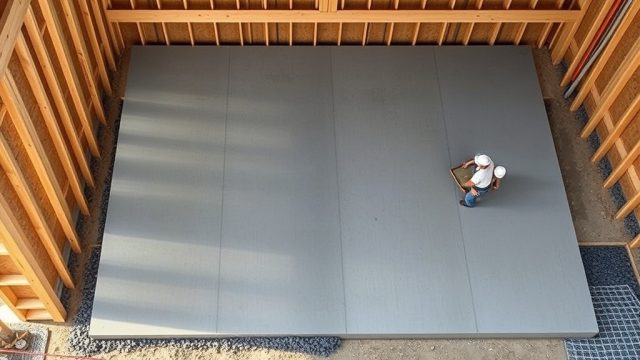
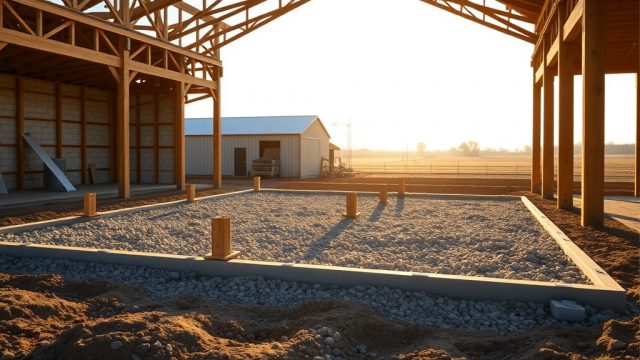
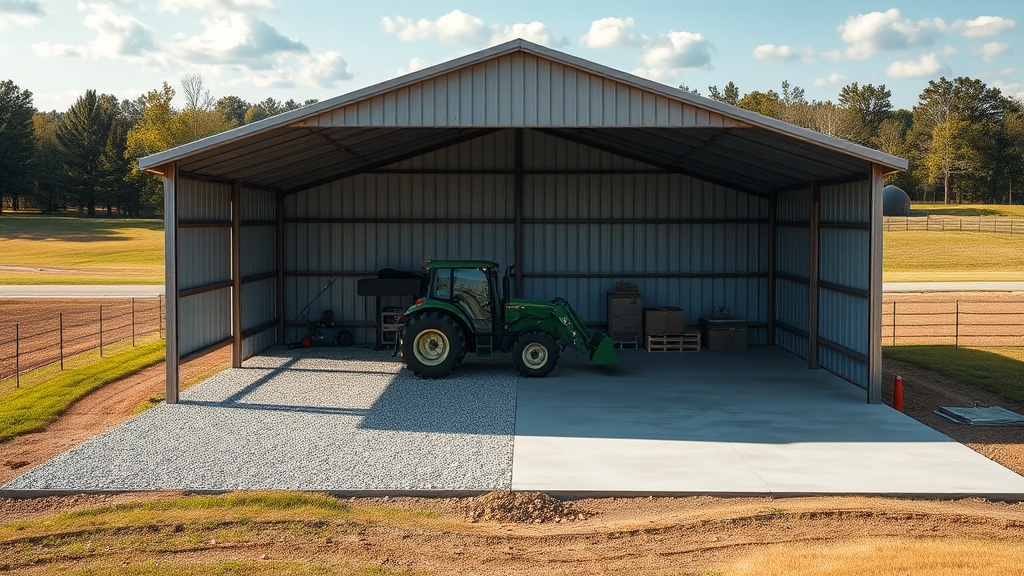
The primary distinction lies in how each option supports the building structure and the floor surface. A gravel base relies on a compacted layer of crushed stone to provide drainage and a level surface for the pole barn’s posts and interior. It’s often used for agricultural storage, equipment sheds, or temporary structures where a smooth, hard floor isn’t essential. In contrast, a concrete slab is a continuous reinforced concrete pad that serves as both the foundation and the finished floor. For a Wick 40×60, a concrete slab is typically 4 to 6 inches thick, poured over a compacted gravel sub-base, and includes control joints to manage cracking.
From a structural standpoint, a concrete slab offers superior load-bearing capacity, making it ideal for workshops, garages, or any space that will see heavy machinery or vehicle traffic. Gravel bases can handle moderate loads but can shift or rut under concentrated weights. For example, a 2-ton vehicle parked repeatedly on gravel will create depressions over time, whereas concrete distributes the load evenly. Additionally, concrete provides a consistent surface for Wick Buildings 40×60: Do You Need Pressure-Treated Skids?—if you’re using skids for equipment, a slab offers a more reliable anchor point.
Cost Comparison
Expect to pay between $4.50 and $7.00 per square foot for a typical 40×60 concrete slab (including materials, labor, and reinforcement). That translates to $10,800 to $16,800 for the full footprint. A gravel base, using 6 to 8 inches of compacted crushed stone, costs roughly $1.50 to $3.00 per square foot, or $3,600 to $7,200. The difference of $7,200 to $9,600 is significant, but so are the performance differences that affect long-term use.
How Does Drainage Compare for Each Foundation Type on a Wick 40×60?
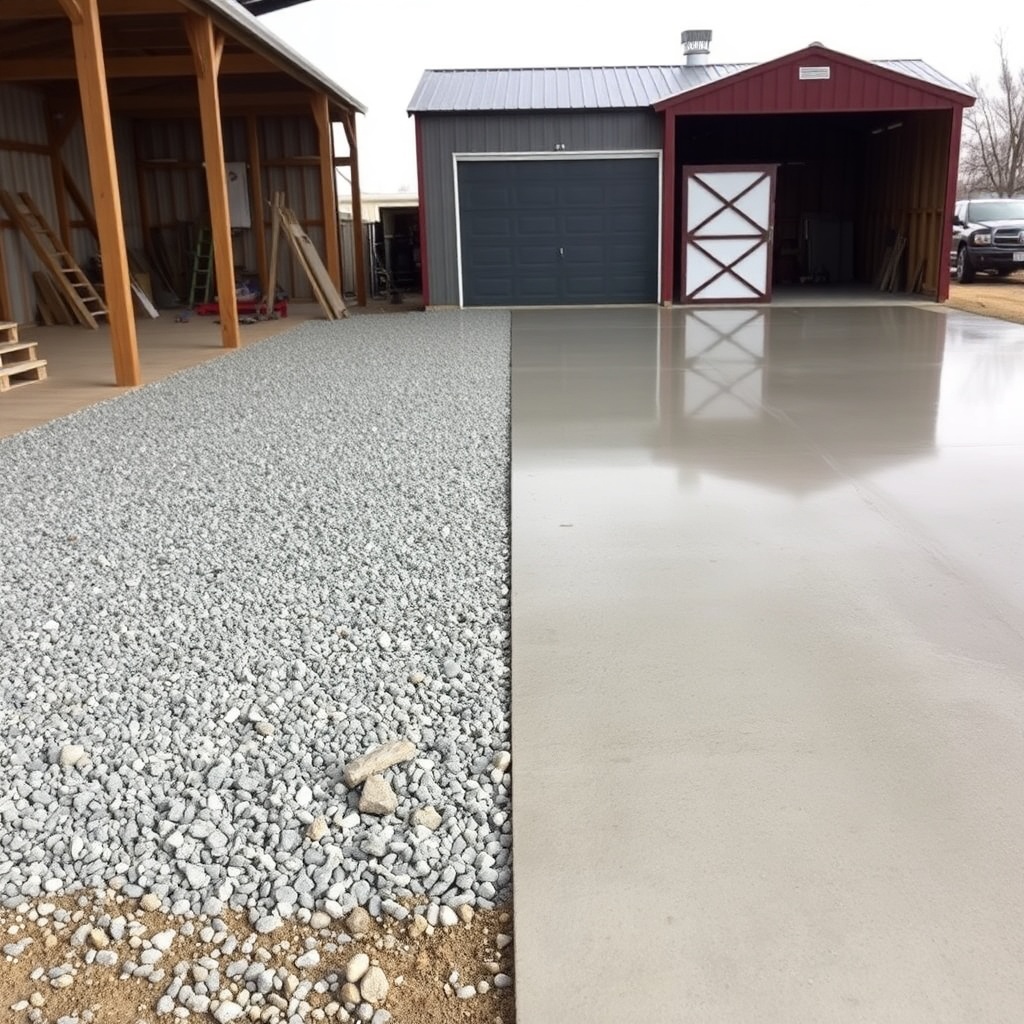
Moisture management is a major concern with any pole barn foundation, especially in regions with high rainfall or snowmelt. A gravel base naturally allows water to percolate through the stone and into the ground below, assuming the soil has good drainage. This reduces the risk of standing water inside the building and helps prevent rot in untreated wood posts. However, without a vapor barrier, moisture can still wick up from the soil, potentially affecting stored equipment or hay. For a Wick 40×60 used as an unheated livestock shelter, gravel is often the better choice because it allows urine and rain to drain away.
Concrete slabs, when properly installed with a vapor barrier (6-mil polyethylene) and a sloped grade (say, 1/8 inch per foot toward a floor drain or the doors), control moisture effectively but require proactive measures. If the slab is poured without a vapor barrier, groundwater can migrate through the concrete, leading to dampness, mold, or floor paint failure. In cold climates, a slab is also more prone to frost heave if the underlying soil is not properly compacted or if drainage around the building is poor. For a Wick 40×60: Metal Siding vs Vinyl Siding Pros and Cons—note that metal siding is more susceptible to corrosion from prolonged damp conditions, so a slab with good drainage may be preferable for a dry interior.
Overall, gravel offers natural, passive drainage, while concrete requires a more engineered approach—but the latter can give you a perfectly dry interior if done right.
What Are the Load-Bearing and Durability Differences in Practice?
For a Wick 40×60, the foundation must support the building’s own weight (including roof trusses, siding, and snow loads) as well as live loads from storage, equipment, or occupancy. Gravel bases distribute point loads through the stone layer but rely entirely on the soil beneath. Over time, heavy concentrated loads (like stacked pallets of grain or a tractor) can cause settlement, especially on clay soils. To mitigate this, some owners opt for a reinforced gravel pad—a deeper layer (12 to 18 inches) of properly graded crushed stone, compacted in lifts—which can handle up to 50 to 60 PSI (pounds per square inch) in bearing capacity.
Concrete slabs, with a compressive strength of 3,000 to 4,000 PSI (typical for residential/light commercial), offer far higher load-bearing capacity. For instance, a 6-inch slab with welded wire mesh or rebar can support 100,000-pound point loads from machinery jacks without cracking—provided it’s reinforced. For a workshop with a 2-post lift, you’d need a thickened slab edge or a separate footing, but for most uses, a standard slab is sufficient. Durability-wise, concrete can last 30 to 50 years with proper sealing and care, while gravel bases require periodic top-dressing and re-leveling every 5 to 10 years, depending on usage.
If your Wick 40×60 Leaning Wall Fix is a concern, a poor foundation can exacerbate issues. A concrete slab provides a more rigid anchor for the building frame, reducing the chances of wall lean from lateral forces.
Severity Table: Foundation Issues for Wick 40×60
| Issue | Usually Not Urgent | Needs Attention Soon |
|---|---|---|
| Gravel base has ruts | Minor depressions from light equipment; can be regraded next season. | Deep ruts (over 3 inches) causing building frame misalignment or door operation issues. |
| Concrete slab has hairline cracks | Cracks less than 1/8 inch wide; common from shrinkage. Monitor for movement. | Cracks wider than 1/4 inch with vertical displacement (heave) or water seepage. |
| Standing water after rain | Puddles less than 2 feet across; can be drained or filled with gravel. | Water pooling inside building for days, causing wood rot or rust on metal siding. |
| Posts shifting at base | Minor movement (under 1/2 inch) from seasonal soil expansion; monitor. | Posts leaning more than 2 inches vertically; indicates foundation failure. |
How Does Installation Time and Effort Differ?
Installing a gravel base for a 40×60 can be a weekend project for a determined owner, assuming you have access to a mini-excavator or skid-steer, a plate compactor, and a dump truck for stone. The process involves stripping topsoil, grading the area to a slight slope (for drainage), and spreading and compacting the gravel in lifts of 4 to 6 inches. Total time: 2 to 4 days for experienced DIYers. Professional installation cuts that to 1 to 2 days.
Concrete slab installation is much more involved. It requires forming the slab with wooden or metal forms (including expansion joints), installing a vapor barrier, placing and tying reinforcement (typically #4 rebar on 2-foot centers or 6×6 welded wire mesh), arranging for a concrete truck (10 to 12 cubic yards for a 6-inch slab), finishing the surface, and curing for at least 7 days before heavy use. Professional contractors need 2 to 3 days for the pour and finishing, plus a waiting period before loading. DIY is risky unless you have prior concrete experience—mistakes in grading or reinforcement can lead to cracking. Expect $600 to $1,200 for concrete rental equipment and forms, plus the material cost.
For both options, the soil condition is critical. In sandy or well-drained soil, gravel is simpler. In clay or high-water-table areas, a concrete slab may require a deeper sub-base or a French drain. Always check local building codes; many jurisdictions require a concrete slab for garages or workshops, especially if you plan to install a Wick 40×60: Sliding Doors vs Roll-Up Doors for End Openings—heavy doors may need a level, stable threshold.
What Are the Cost-Benefit Scenarios for Each Foundation?
The choice often comes down to your specific use case and budget. Here’s a practical breakdown:
- Gravel base is best for: Unheated storage (hay, tools, or equipment), livestock shelters, or temporary structures where you may need to move the building later. Savings of $7,000 to $10,000 can be redirected into better siding like Metal Siding vs Vinyl Siding or a radiant barrier.
- Concrete slab is best for: Workshops, man caves, garages, or any space with heavy machinery, vehicles, or foot traffic requiring a clean, hard floor. It adds significant resale value and is easier to clean and maintain.
Beware of “budget” concrete slabs: a thin (3-inch) slab without reinforcement will crack under load. Similarly, using gravel on sloping ground without proper compaction can lead to erosion. If you plan to heat the building, concrete offers thermal mass that helps regulate temperature, especially when paired with Does a Radiant Barrier Work for Wick 40×60 Pole Barns? underneath the slab.
In cold climates (USDA zones 4 and below), consider whether you need a frost-protected slab. Gravel bases are not frost-resistant; the building’s posts are typically set in concrete footings below frost line. A concrete slab without frost protection may heave. For most Wick 40×60 owners, a gravel base is fine if the posts are footed properly, but a slab requires a deeper foundation or perimeter insulation.
What Owners Say
Based on feedback from Wick 40×60 owners in the Upper Midwest and Plains states, here are two common observations:
“I chose a gravel base for my 40×60 to store tractors and hay. It’s been four years and I only had to top-dress once after a wet spring. The key was using 3-inch crushed limestone instead of pea gravel—it locks together and doesn’t shift under tires. I saved $8,000 compared to concrete, which I used that money to buy a good sliding door system.” – Thomas, Nebraska
“We poured a 5-inch slab with fibermesh for our workshop. It cost $14,500, including vapor barrier and a 4-foot apron. Two years later, no cracks, and the floor is warm enough to work on when we drop a propane heater. If you’re using heavy tools or a jack, concrete is the only way to go. Gravel would be impossible for my mill.” – Sarah, Wisconsin
The consensus: gravel saves money but requires periodic maintenance and doesn’t suit high-demand uses; concrete is a one-time investment that pays off if you value a durable, clean workspace.
Frequently Asked Questions
1. Can I install a concrete slab later if I start with gravel?
Yes, but it’s more labor-intensive. You’ll need to remove the gravel, excavate the area, compact the soil, pour a new sub-base, and then pour the slab. The building’s posts may need footing reinforcements. It’s better to decide at construction to avoid rework.
2. How thick should the gravel base be for a Wick 40×60 used as a vehicle garage?
For passenger vehicles, 4 to 6 inches of compacted crushed stone (3/4-inch minus) is sufficient. For heavy trucks or equipment, increase to 8 to 12 inches and use geotextile fabric beneath to prevent mixing with soil.
3. Does a concrete slab add weight to the building structure?
No, the slab is a floor slab, not a structural foundation for the posts. It supports interior loads but does not bear weight from the building frame (which is carried by concrete footings under each post). Ensure your contractor understands this separation.
4. Will a gravel base void Wick’s warranty?
No, a gravel base does not void the warranty for Wick 40×60 kits, provided the posts are anchored correctly per the building plan (typically using concrete footings). However, interior damage caused by shifting gravel (e.g., door misalignment) may not be covered. Check your specific warranty terms.
5. How do I prevent weeds from growing through a gravel base?
Install a heavy-duty landscape fabric (10-ounce weed barrier) under the gravel, overlapping seams by 12 inches. This stops weeds from rooting and also prevents stone migration into soil. Reapply every 3 to 5 years if needed.
6. Is a concrete slab required for a heated Wick 40×60 workshop?
Not strictly required, but highly recommended. Concrete provides a stable, insulated floor that prevents cold ground from radiating cold air. For radiant floor heating, a slab is essential. Budget 10 to 15 percent more for insulation under the slab (R-10 or higher).