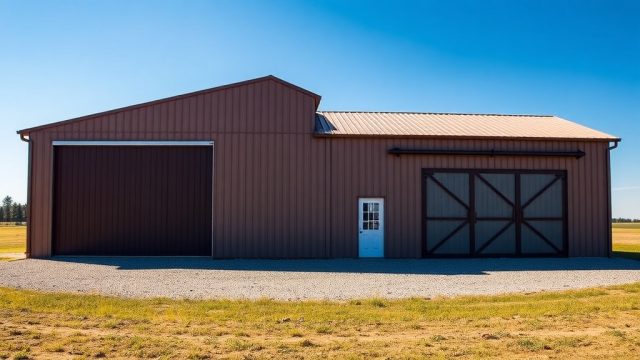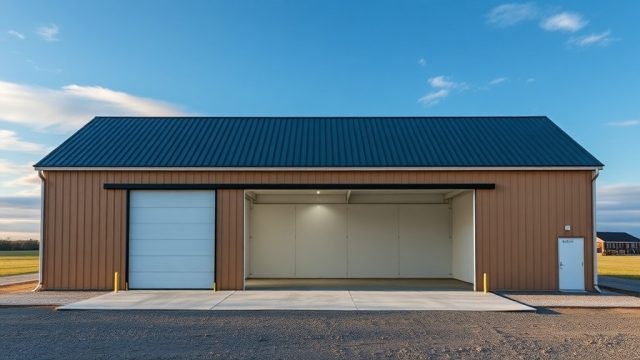

Wick 40×60: Sliding Doors vs Roll-Up Doors for End Openings
When planning the end openings for your Wick 40×60 pole barn, the choice between sliding doors and roll-up doors significantly impacts daily use, security, and long-term maintenance. Sliding doors offer wide clearance and a traditional look, while roll-up doors provide modern convenience and insulation. This article breaks down the practical differences—weight, cost, and operation—so you can select the best fit for your machinery or storage needs.
Do Sliding Doors on a Wick 40×60 Handle Large Machinery Better?
Sliding doors can open fully, leaving a clear 16- to 20-foot span for backing in combines or trucks. They hang from an overhead track, not floor-mounted hardware, so snow or gravel buildup rarely blocks them. However, they need clearance on the sidewall—usually 12 to 18 inches—to stack the door panels. For a 40×60, that means you lose some usable wall space. Roll-up doors, especially 12 or 14 feet wide, still allow entry for most farm equipment but may require a clearance of 10 to 12 inches from the header to the ceiling. If you routinely park a large baler or a flatbed truck, sliding doors give you extra horizontal room without reducing headroom.
Another factor is the weight of the door. A 20-foot-wide sliding door in heavy-gauge steel can weigh 800 to 1,000 pounds. The track and brackets must be bolted to the pole barn’s end wall, and the columns themselves need to be sturdy—usually 6×6 or 8×8 posts. If your Wick 40×60 has a relatively light structural system, you might need to reinforce the framing before installing a large sliding door. Roll-up doors, by contrast, distribute weight through a spring-counterbalanced drum system that attaches directly to the jamb, putting less stress on the building’s main columns.
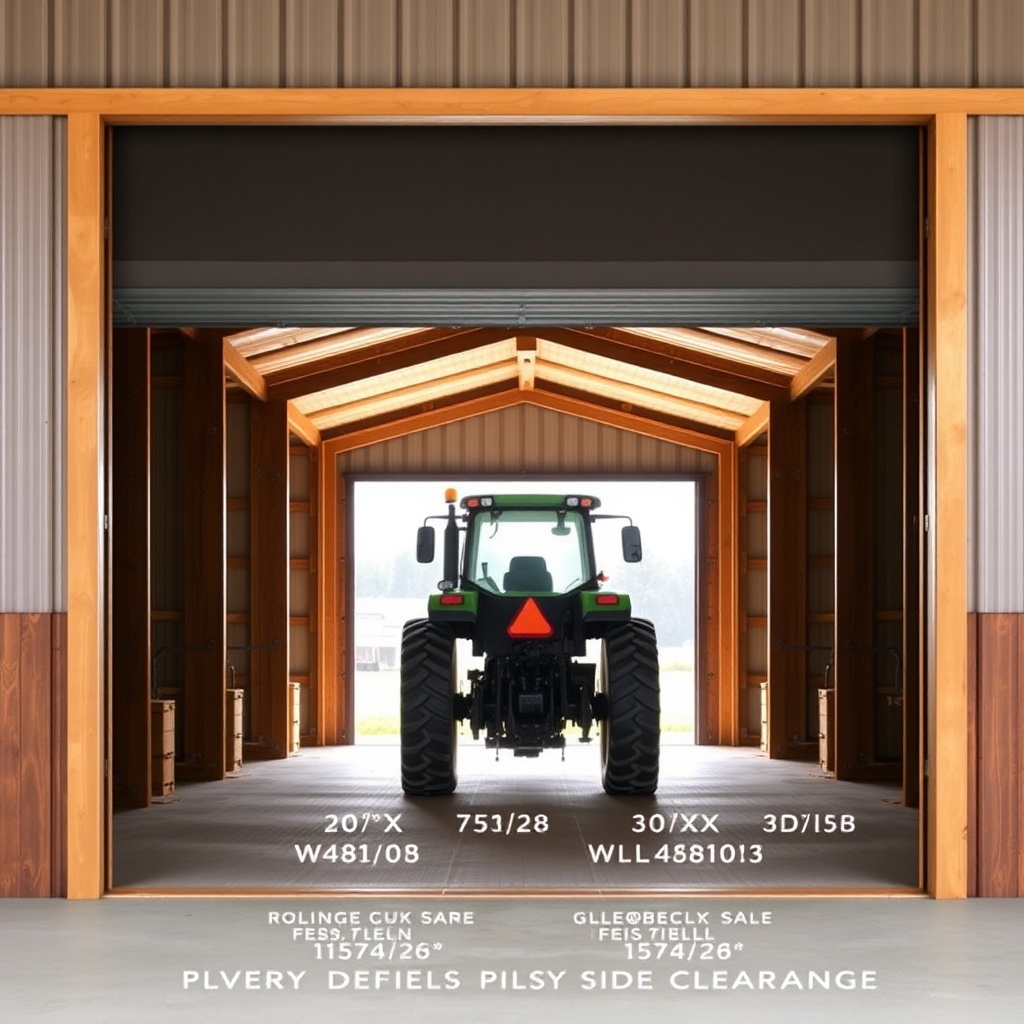
How Do Roll-Up Doors Improve Insulation and Energy Efficiency in a Wick 40×60?
Roll-up doors typically come with factory-installed insulation, often R-6 to R-8, using polyurethane foam between steel skins. Sliding doors, unless custom-built with insulated panels, are usually single-skin steel and offer minimal thermal resistance. For a 40×60 pole barn used as a workshop or heated storage, this difference matters. Roll-up doors also seal against the floor with a rubber bottom astragal, so drafts aren’t sneaking in under the door. Overhead sectional doors, which are similar to roll-ups but with panels, can achieve even higher R-values—up to R-16—if you need more insulation.
The practical effect in a Wick 40×60 is that a roll-up door reduces heat loss through the end wall roughly 30 percent more than an uninsulated sliding door, based on typical Minnesota or Wisconsin winters (where Wick Buildings are common). If you plan to add a radiant barrier under the roof, the combination with an insulated overhead door makes the whole building easier to keep warm. Sliding doors can be retrofit with foam board, but that’s not a factory option and often cracks over time.
What’s the Cost Difference for Sliding vs Roll-Up Doors on a Wick 40×60?
Price depends on width, height, and material gauge. A standard 12×12 sliding door kit (including track, rollers, and hardware) for a Wick 40×60 pole barn runs about $1,800 to $2,500. For a 16×12 sliding door, expect $2,200 to $3,000. Roll-up doors in the same sizes cost more because of the spring assembly and insulation: $2,800 to $4,200 for 12×12, and $3,500 to $5,000 for 16×12. If you choose an insulated roll-up door (R-8 or higher), add roughly 20 percent.
Installation labor also differs. Sliding doors can be installed by two people in half a day if the track is straight and columns are plumb. Roll-up doors require precise winding of torsion springs and careful adjustment of cables—often taking a full day for a professional installer. Hiring that out for a Wick 40×60 might cost $400 to $800. Over the life of the building, a sliding door needs less maintenance because there’s no spring mechanism to fatigue. However, the upfront cost difference between the two types is roughly $1,000 to $2,000, depending on local suppliers.
| Door Type | Typical Cost (12×12, Installed) | Insulation (R-Value) | Ease of Repair | Clearance Required |
|---|---|---|---|---|
| Sliding Door | $2,200 – $3,200 | None (uninsulated) to R-4 with retrofit | Easy; basic tools needed | 12-18 inches sidewall clearance |
| Roll-Up Door | $3,600 – $5,800 | R-6 to R-16 | Moderate; springs require professional | 10-12 inches headroom |
Which Door Type Is More Durable for Snow and Wind in a Wick 40×60?
Sliding doors are mechanically simple, but they’re vulnerable to ice buildup in the track that can prevent smooth operation. Snowdrifts around the base of the door can also be a problem if the bottom seal isn’t tight. In heavy winds, sliding doors can rattle or, if not locked, slide open slightly. Roll-up doors are more wind-resistant because the door panels interlock and the springs tension them against the jambs. For locations with gusts over 80 mph, a roll-up door with windload reinforcement (rated for 120 mph) is a safer bet.
In a Wick 40×60 shed-roof design, the end wall with the door faces prevailing weather. If you’re in a region with heavy snowfall, rolling up the door prevents snow from piling against the door face. Sliding doors, when opened, leave the panels exposed on the side, sometimes accumulating snow on top of the panels that can freeze them shut. A simple trick is to tilt the top of a sliding door track slightly to shed snow, but most standard tracks aren’t designed for that.
Do Sliding Doors Require More Maintenance Than Roll-Up Doors on a Wick 40×60?
Sliding doors have fewer moving parts: rollers, track, and a latch. Maintenance involves lubricating rollers yearly and cleaning snow or gravel from the track. The main issue is that the door might sag over time if the hangar brackets loosen, causing it to drag. Roll-up doors have torsion springs, cables, drums, and a chain hoist or motor. Springs last 10 to 15 years before they break; cables fray near the drums. A broken spring can cause the door to crash down, which is dangerous. But roll-up doors also have fewer corrosion-prone exposed parts because the panels enclose the mechanism.
For a Wick 40×60 that sees daily use (like a repair shop), a sliding door will need yearly track realignment. A roll-up door requires periodic spring tension checks. If you’re handy with tools, sliding door maintenance is DIY-friendly. Roll-up door spring adjustments are best left to a pro. Consider whether you want to be under the spring risk: sliding doors are very low injury risk, while roll-up doors have caused hand and head injuries if safety cables aren’t installed.
What Owners Say About Sliding vs Roll-Up Doors on a Wick 40×60
Owner feedback on Wick 40×60 pole barn forums suggests a split: those using the building for heavy equipment often praise sliding doors for their no-fuss wide opening. One Wisconsin owner said, “My 16-foot sliding door clears my tractor with inches to spare—wouldn’t go with a roll-up because I don’t want the complexity.” Another owner in Iowa mentioned that his roll-up door in a 40×60 shop freed up wall space for bench tools and kept the interior warmer.
A frequent complaint about sliding doors is that the bottom seal wears quickly if the door rubs on concrete. Several owners replaced the rubber seal every two years. For roll-up doors, the common gripe is spring breakage after 8 to 10 winters, costing $300 to $500 to replace. “I had a spring let go in January—door was stuck open for two days,” said a Minnesota owner. But the same owner also noted the thermal performance made it worth it. For a building like the concrete slab foundation is recommended for roll-up door installations because the floor level is critical for the bottom seal to work properly.
Frequently Asked Questions
Can I install a 20-foot sliding door on a Wick 40×60 pole barn?
Yes, but you need to verify the end wall columns are at least 6×6 pressure-treated and that the header beam can support the extra weight. Some Wick 40×60 models come with 4×6 columns, which may require reinforcement for a 20-foot door. Check the building’s load table before ordering.
Do roll-up doors on a Wick 40×60 need a concrete apron for good sealing?
Ideally, yes. Roll-up doors seal against a smooth, level surface. A poured concrete apron 4-6 inches thick is best. If you have a gravel floor, the door’s bottom edge will create gaps, letting in pests and drafts. Many owners pour a 4-foot-wide slab just at the door opening, even if the rest of the floor is gravel. Read our guide to gravel vs concrete for more details.
Which door type is easier to automate on a Wick 40×60?
Roll-up doors are simpler to automate because they accept standard garage door openers with chain or jackshaft drives. Sliding doors can be automated, but require a special sliding gate motor and a 4-inch diameter tube track. That adds $1,200 to $1,800 for motor and rail. Most owners find roll-up automation more practical and cost-effective.
Does the siding material affect door installation for a Wick 40×60?
Yes, the jamb thickness changes if you use metal siding vs vinyl siding. Metal siding requires a 1.5-inch gap for the door jamb to wrap. Vinyl is thicker—around 2 inches—so the door frame must be adjusted. Check your siding choice before ordering doors to ensure the rough opening matches.
Can I retrofit a sliding door with windows on a Wick 40×60?
Yes, you can buy sliding door panels with pre-installed acrylic or glass windows. However, the glass adds weight—avoid exceeding the track’s rated capacity. A typical 16-foot sliding door holds up to 60 pounds of window inserts. For a 40×60 building, windows on the door let in natural light for the tractor bay.
Will a leaning end wall affect how my door operates?
Absolutely. A leaning wall can cause a sliding door to bind or a roll-up door to jam. If your Wick 40×60 end wall is out of plumb by more than 1/2 inch, address the lean before installing a door. Our guide on fixing a leaning wall offers step-by-step bracing methods that will make the door operate smoothly.