Why Does the Wick Buildings 40×60 Need a Proper Vapor Barrier Under the Concrete Slab?
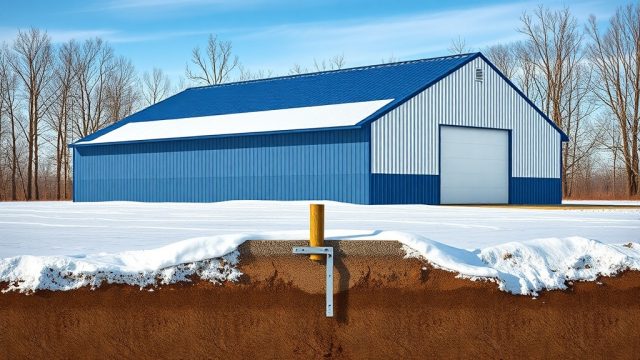
A Wick Buildings 40×60 pole barn, with its 2,400 square feet of interior space, demands a foundation that resists moisture migration. Without an effective vapor barrier under the concrete slab, ground moisture can wick upward, leading to condensation, mold growth, and deterioration of stored equipment or flooring finishes. The vapor barrier acts as a critical shield, preventing hydrostatic pressure from pushing water vapor through the slab and into the building envelope.
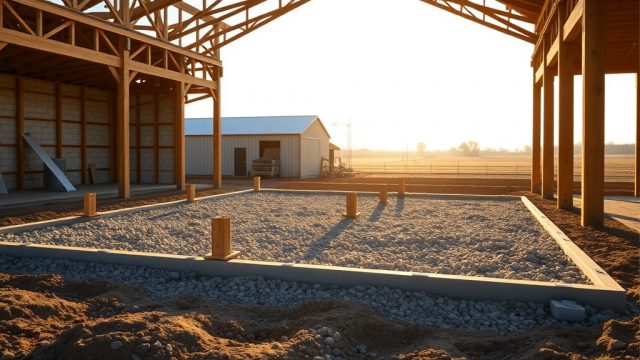
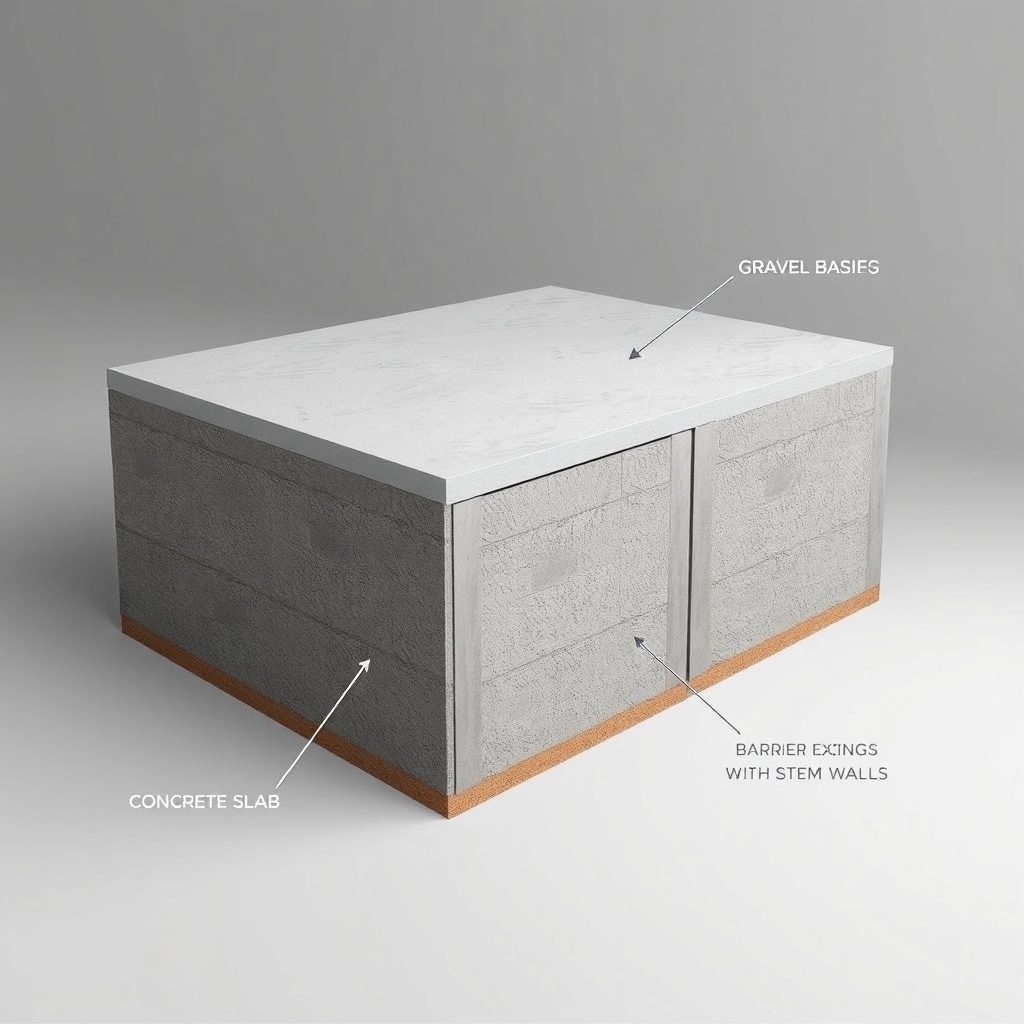
For a Wick 40×60, the standard recommendation is a 6-mil or thicker polyethylene sheet (10–15 mil preferred for durability) installed directly over a compacted gravel base and before the concrete pour. This barrier must be continuous, with seams overlapped at least 12 inches and taped with moisture-resistant tape. It should extend up the foundation walls or stem walls by at least 6 inches, creating a bathtub-like seal that isolates the slab from ground moisture. For buildings in high water table areas or with heated interiors, a 15-mil barrier with a perm rating below 0.1 is advisable. This installation directly supports the gravel base vs concrete slab comparison by ensuring the slab performs as intended.
How Should the Vapor Barrier Be Anchored to the Wick Buildings 40×60 Foundation?
The vapor barrier must be mechanically anchored to prevent shifting or tearing during the concrete pour. For a Wick 40×60 slab, anchor the polyethylene sheets using 2×4 or 2×6 pressure-treated lumber nailed or screwed into the formwork every 24 inches along the perimeter. Alternatively, use heavy-duty staples (1.5-inch crown staples) driven into the wood forms at 18-inch intervals. The barrier should be pulled taut but not stretched, allowing for natural settling. At interior anchor points, place sandbags or crushed stone bags every 4 feet to hold the barrier flat. For the slab perimeter, the barrier should extend 6 inches above the finished slab grade, then be folded back and secured to the forms. This method ensures the barrier remains intact when installing sliding or roll-up doors near the slab edge, preventing moisture from undermining door tracks.
What Are the Critical Steps for Installing the Vapor Barrier Under a Wick 40×60 Slab?
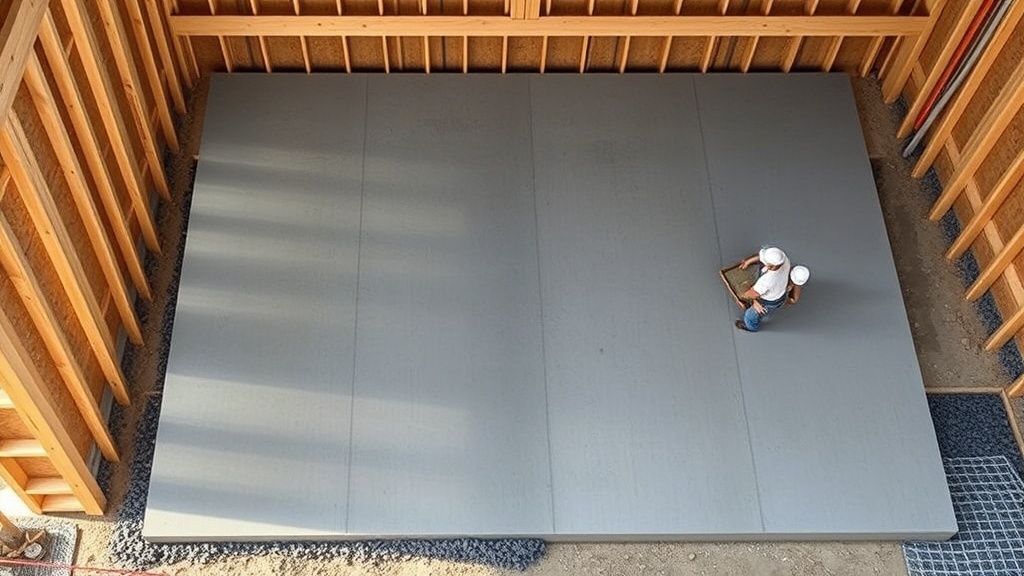
Installation follows a sequence that protects the barrier from damage. Begin by grading the subgrade to a consistent slope (1/8 inch per foot toward doors for drainage). Compact the subgrade to 95% Standard Proctor density. Place a 4- to 6-inch gravel base (3/4-inch crushed stone) and compact it. Lay the vapor barrier over the gravel, ensuring it extends beyond the slab edges by 12 inches. Overlap seams by 12 inches and tape with butyl or acrylic tape. For a Wick 40×60, you will need roughly 2,600 square feet of material (accounting for overlaps and edge rises). Backfill the edges with gravel or sand to hold the barrier in place. Place reinforcing mesh or rebar on chairs (2-inch minimum coverage) on top of the barrier. Use a concrete mix with a water-cement ratio no higher than 0.50 and add a water reducer to minimize bleeding. Cure the slab for at least 7 days with wet curing or curing compound. This process ties into blown-in vs faced batt insulation decisions, as a dry slab improves insulation performance.
What Is the Proper Vapor Barrier Specification for a Heated Wick 40×60 Pole Barn?
| Component | Unheated Barn (Minimal Risk) | Heated Barn (Controlled Environment) | High Humidity / Workshop |
|---|---|---|---|
| Vapor Barrier Thickness | 6 mil polyethylene | 15 mil polyethylene or 10 mil HDPE | 20 mil reinforced polyethylene |
| Perm Rating | Below 0.3 perms (unfaced) | Below 0.1 perms | Below 0.05 perms |
| Seam Overlap | 12 inches, no tape (if using gravel base) | 12 inches, taped with butyl tape | 18 inches, dual-taped seams |
| Edge Extension | 4 inches above slab | 6 inches above slab | 8 inches above slab, sealed to wall |
| Protection Over Barrier | 2 inches sand or gravel | 2 inches sand | 1 inch foamboard or 2 inches sand |
| Concrete Cover (rebar) | 2 inches (min) | 2.5 inches (min) | 3 inches (min) |
| Cost per square foot installed | $0.30–$0.50 | $0.60–$1.00 | $1.20–$1.80 |
For a heated Wick 40×60, investing in a 15-mil barrier with taped seams prevents cold-weather condensation that can damage insulation and metal panels. The extended edge sealing also helps when selecting roof panel steel gauge, as a dry interior reduces condensation risk on metal surfaces.
What Are Common Mistakes When Installing the Vapor Barrier for a Wick 40×60 Slab?
Three frequent errors compromise the barrier’s effectiveness. First, using under-slab insulation that is not compatible with vapor barriers—some rigid foam boards act as a vapor retarder themselves, but incomplete sealing at joints creates moisture pathways. Second, failing to protect the barrier from foot traffic before concrete placement. Workers walking on the barrier can cause punctures that allow vapor to rise. Third, not extending the barrier up foundation walls or stem walls. For a Wick 40×60 with a perimeter foundation, the barrier must lap onto the wall by at least 6 inches and be sealed with a compatible mastic. These mistakes can lead to slab curling or delamination, requiring a costly leaning wall fix if moisture causes soil movement. Always inspect the barrier for tears immediately before the concrete truck arrives.
What Do Owners Say About the Vapor Barrier Installation for Wick 40×60 Barns?
Wick 40×60 owners emphasize the barrier’s role in preventing frost heave and interior dampness. One owner in the Midwest reported that after installing a 15-mil barrier with 12-inch taped seams, his barn floor stayed dry even through spring thaws, whereas a neighbor’s barn without a barrier had puddles. Another owner noted that the barrier cost an additional $450 for his slab but saved $2,000 in potential mold remediation. Several owners stress the importance of using a “crush-proof” barrier if heavy rebar mats are placed on top. A common tip: lay a sacrificial layer of 2-inch foamboard over the barrier if you will be welding or cutting steel inside the barn later. Most owners agree that the barrier installation is a “do it right or don’t do it at all” step, especially given the high resale value of a Wick building.
Frequently Asked Questions About Wick Buildings 40×60 Vapor Barriers
Can I use a 6-mil vapor barrier for a heated Wick 40×60?
Yes, but it is not recommended. A 6-mil polyethylene sheet has a higher perm rating (around 0.3) and is more prone to punctures during concrete placement. For a heated structure, a 15-mil barrier with a perm below 0.1 is safer and meets most building codes for conditioned spaces.
Do I need a vapor barrier if my Wick 40×60 is on a gravel floor?
No, a vapor barrier is only required under a concrete slab. For a gravel floor, ground moisture passes through the gravel and evaporates naturally. However, if you later pour a slab, you will need to install a barrier.
How do I seal the vapor barrier around foundation anchor bolts?
Use a rubberized asphaltic sealant or a foam gasket. Cut an X-shaped slit in the barrier at each bolt location, slip it over the bolt, and apply sealant around the base. This prevents moisture traveling up the bolt into the slab.
Should the vapor barrier go under or over the gravel base?
Under the gravel base? That is a common misconception. The vapor barrier must be placed directly under the concrete slab, on top of the compacted gravel base. Placing it under the gravel allows gravel to act as a wicking layer, drawing moisture to the slab.
Does the vapor barrier affect the concrete curing process?
Yes, it can slow moisture evaporation from the bottom of the slab, which helps reduce cracking and curling. However, you still need to cure the top surface with wet burlap or a curing compound to prevent rapid moisture loss.
What is the cost range for a vapor barrier for a 40×60 slab?
Materials alone run $200–$600 depending on thickness and tape quality. Installation labor adds $300–$800. Total cost is typically $0.30–$1.80 per square foot installed. For a typical unheated barn, budget $500; for a heated barn, budget $1,200.
For comprehensive information on maintaining your Wick 40×60’s structural integrity, see the wind bracing retrofit guide.