When Should You Consider Retrofitting Wind Bracing on a Wick 40×60?
Owners of a Wick 40×60 pole barn often discover wind bracing issues years after installation—especially if the structure sits in an open field or on a ridge. The original cable or rod system may have loosened, corroded, or been designed for lower wind loads than modern codes require. Retrofitting with high-tensile cable or threaded rod can prevent catastrophic racking, leaning walls, and roof collapse. This article covers the signs to watch for, the retrofit options, and what local owners typically pay in Australian dollars (AUD).
How Does Wind Bracing Work in a Wick 40×60 Pole Barn?
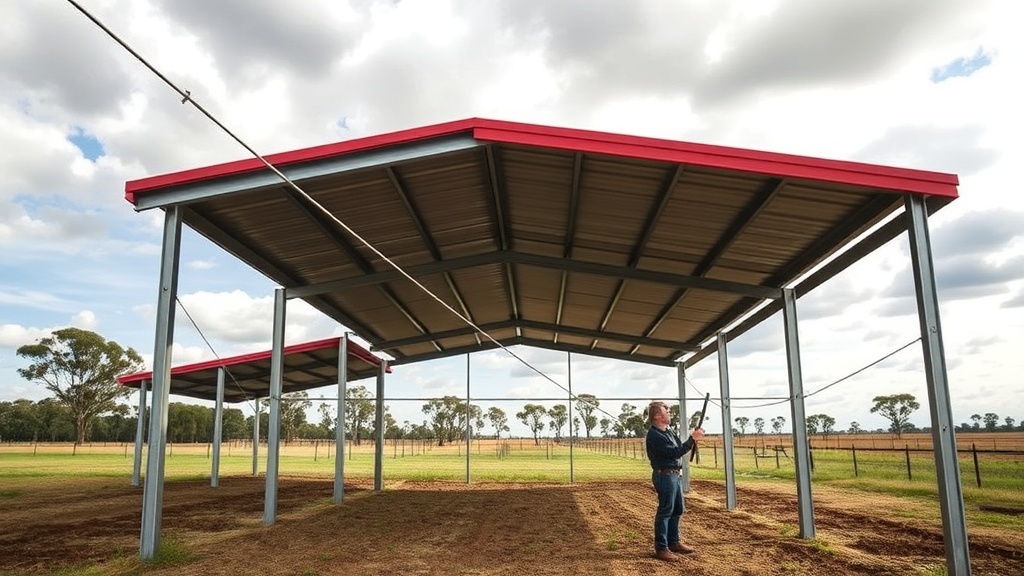
Wind bracing consists of diagonal steel cables or rods that transfer lateral forces from the roof and walls down to the foundation. In a typical Wick 40×60, these braces run from the top of a column to the bottom of an adjacent column, forming an X or a single diagonal in each bay. The system resists the enormous pressure that a 100 km/h gust can exert on the broad side of the building, which at 40 feet by 60 feet (about 2400 square feet of wall area) can exceed 12,000 pounds of force per bay.
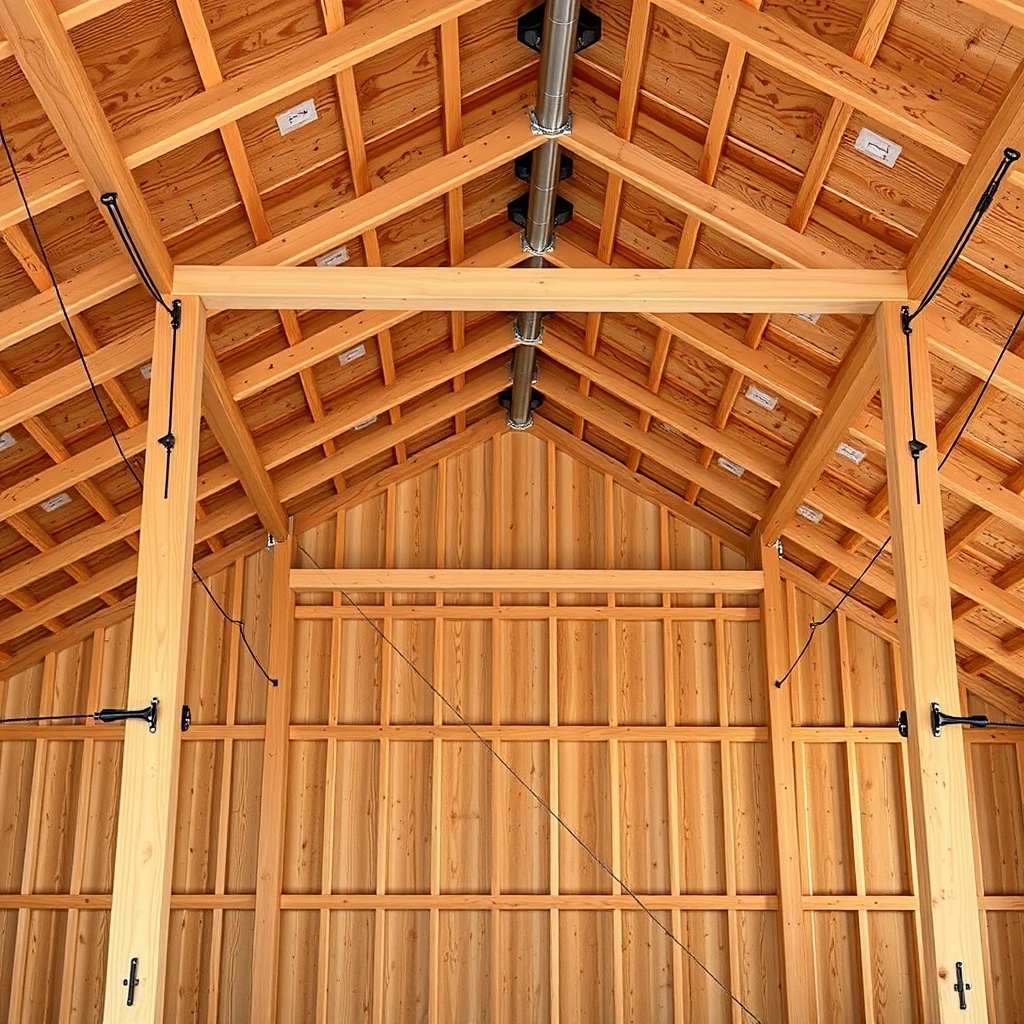
Without proper bracing, the building can distort, causing doors to jam, roof panels to pull apart, and columns to lean. For reference, Fixing a Leaning Wall on a Wick 40×60 Pole Barn explains how ongoing neglect leads to structural shifts that require column replacement.
How Can You Tell If Your Existing Bracing Has Failed?
Look for these specific indicators inside your Wick 40×60:
- Loose cables – Cables should be taut enough that they cannot be deflected more than 25 mm by hand pressure. A drooping cable with more than 50 mm of slack indicates serious loss of tension.
- Rust or corrosion – Galvanised cables can still corrode at anchor points, especially if treated wood preservatives were used near them. Red rust flakes or pitting on rods means immediate replacement.
- Broken turnbuckles – The threaded bodies or hooks may fatigue and crack after years of load cycling. A failed turnbuckle makes the entire brace useless.
- Misaligned doors or windows – If your sliding door binds or the overhead door scrapes the frame, the building is likely racked. Check the Wick 40×60: Sliding Doors vs Roll-Up Doors for End Openings article for typical alignment tolerance.
- Gaps between wall panels – A 5 mm gap between two steel sheets at a seam often points to the building parallelogramming under wind load.
A quick way to quantify the issue is to measure the diagonal distance from the bottom left corner to the top right corner of a bay, then compare it with the opposite diagonal. If the difference exceeds 20 mm over a 12-foot bay, the bracing is inadequate.
Cable Retrofit vs. Rod Retrofit: Which Is Right for Your Wick 40×60?
Both cable and rod systems can restore the building’s rigidity, but they have distinct differences in cost, tensioning method, and durability. The table below compares the two options for a standard 40×60 footprint with 8-foot eave height.
| Feature | Galvanised Cable (10 mm) | Threaded Rod (12 mm) |
|---|---|---|
| Typical cost per bay (materials only) | $85–$120 AUD | $60–$90 AUD |
| Tensioning tool needed | Cable tensioner or come-along | Wrench or socket |
| Ease of installation | Moderate; requires cutting and swaging | Easy; cut to length, thread ends |
| Adjustability after installation | Good; turnbuckle allows fine tuning | Limited; must loosen nuts at anchors |
| Corrosion resistance | High (galvanised) | Moderate (zinc plated rod) |
| Lifespan in coastal climate | 10–15 years | 5–8 years (unless stainless steel) |
For owners who plan to insulate and finish the interior, rod retrofits are less obtrusive and can be painted to match. However, cable systems distribute load more evenly across the column and are preferred in high-wind zones. Remember that any retrofit must comply with local building codes, which typically follow the AS/NZS 1170.2 wind load standard in Australia.
What Is the Step-by-Step Process for a Cable Retrofit?
Retrofitting cable bracing into an existing Wick 40×60 involves these steps. Always consult a structural engineer if you are unsure about anchorage points or load paths.
- Inspect all columns – Confirm that the columns are sound and not rotted at the base. A leaning column must be straightened before bracing. See Fixing a Leaning Wall on a Wick 40×60 Pole Barn for straightening techniques.
- Mark brace locations – Use a chalk line to indicate the diagonal from the top of one column to the bottom of the adjacent column, ideally in every second bay.
- Drill anchor holes – For cable systems, use 16 mm holes through the column at the marked points. Insert a 12 mm eyebolt with a large washer and nut on the inside.
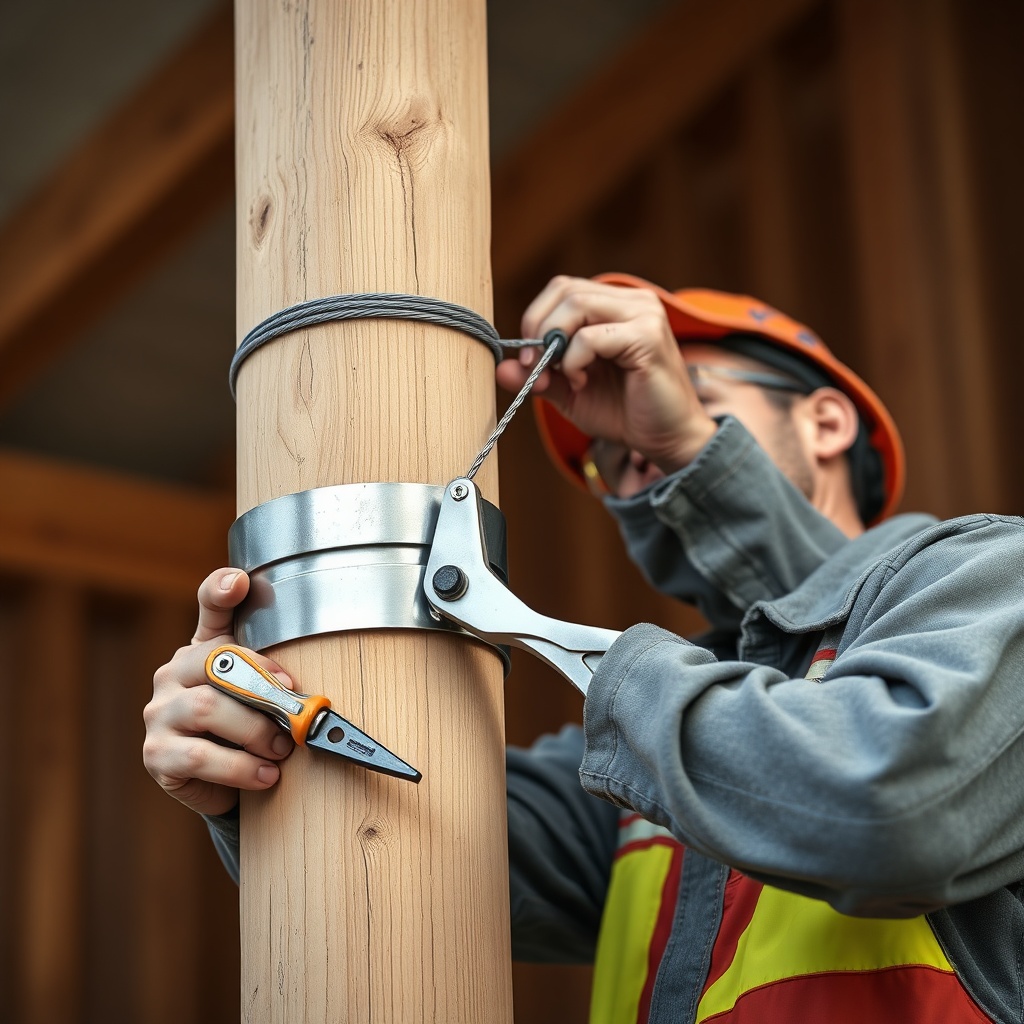
- Cut and attach cable – Cut 10 mm galvanised cable to length, allowing extra for wrapping around the eyebolts. Swage a thimble and cable clamp on each end.
- Tension the cable – Use a cable tensioner or a come-along to pull the cable taut. A good rule of thumb: the cable should deflect no more than 10 mm under 50 kg of hand force at mid-span.
- Secure turnbuckle – Install a turnbuckle inline to allow future adjustments. Tighten until the cable produces a clear, low-pitched note when plucked.
- Recheck diagonal measurements – Verify that the building is square and no new racking has occurred.
A full cable retrofit for a 40×60 with 10 bays typically costs between $850 and $1,200 AUD in materials, plus one to two days of labour at $50–$80 per hour for a handyman or builder.
What Are the Signs That Only a Partial Retrofit Is Needed?
Not every Wick 40×60 requires a full re-brace. Partial retrofits can address localised problems such as:
- End wall racking – If the end wall (40-foot side) is swaying, you can install two diagonal cables in that bay only for about $170–$200 AUD in materials.
- Door opening reinforcement – A 12-foot sliding door opening often lacks bracing on either side. Adding two short cables (from the top of the door header to the bottom of the adjacent column) costs roughly $90 AUD per side.
- Transition between foundation types – If you have a Wick 40×60 Foundation: Gravel Base vs Concrete Slab Comparison, the interface between a gravel base and concrete slab can settle differently, causing misalignment. Bracing adjustment at that junction often solves the issue.
For partial retrofits, rod is often preferred because it is easier to cut and install without specialised tools. A 12 mm threaded rod with washers and nuts costs about $8 per metre at hardware stores.
What Do Owners Say About Wind Bracing Retrofits?
Wick 40×60 owners in South Australia and Victoria report mixed early experiences. One owner near Murray Bridge said his 15-year-old barn had developed a noticeable lean in the 40-foot end wall after a 110 km/h storm. He replaced three slack cables with 12 mm rod and corrected the racking in one afternoon. “The sliding door works perfectly now—no more binding,” he noted.
Another owner in the Hunter Valley retrofitted cables on his man cave after realising the original builder had skipped every other bay. He added two extra cables at a cost of $340 AUD and says the building is now rock-solid during winter westerlies. A third owner, who uses his 40×60 as a workshop, filmed a time-lapse showing the walls shifting 15 mm in a moderate breeze before the retrofit, and zero movement afterward.
However, some owners caution against using undersized cable. One farmer in northern NSW used 6 mm cable on a 40×60 and saw it snap within a year. His advice: stick with minimum 10 mm cable and inspect turnbuckles every autumn.
How Does Wind Bracing Affect Your Foundation Choice?
Your bracing system directly interacts with the foundation. Cable or rod end anchors must tie into a solid base—concrete footings or well-compacted gravel. If you have a gravel base, anchor bolts may not hold as securely over time. The Wick 40×60 Foundation: Gravel Base vs Concrete Slab Comparison discusses how a concrete slab provides a superior anchoring substrate for bracing hardware. Many owners who retrofit bracing also upgrade their anchor bolts to 16 mm galvanised steel, embedded into 300 mm deep concrete piers, for an additional $120–$180 AUD per column.
If you have a gravel base, you can still install effective bracing by driving 1200 mm ground screws at each brace point. These cost about $35 AUD each and can be connected to the cable or rod with a 90-degree bracket. Total cost for eight ground screws across four bays: roughly $280 AUD.
Frequently Asked Questions
Q1: Can I install wind bracing myself, or should I hire a professional?
A: If you are comfortable drilling through columns, swaging cables, and tensioning lines, a DIY retrofit is feasible for one or two bays. For a full 40×60 building, hiring a contractor ensures the loads are balanced and meets local certification requirements. Expect to pay $600–$1,000 AUD labour for a complete job.
Q2: Will adding bracing void my building warranty?
A: Wick Buildings typically allows retrofits as long as you do not modify structural columns or roof trusses without approval. Check your warranty document or contact Wick’s customer service before drilling more than 16 mm holes.
Q3: How often should I inspect the wind bracing on my Wick 40×60?
A: Inspect all cables, turnbuckles, and anchor points annually, ideally in late spring before storm season. Also inspect after any gust over 90 km/h. Tighten any slack cables immediately.
Q4: Does using a radiant barrier affect wind bracing installation?
A: Radiant barrier foil can interfere with cable placement if it hangs loose. The Does a Radiant Barrier Work for Wick 40×60 Pole Barns? article explains how to install barrier around bracing hardware without tearing it.
Q5: Can I combine wind bracing with metal siding installation?
A: Yes, but you must coordinate sequencing. Install bracing first, then attach siding over it. If you already have siding, you may need to remove panels to access the column faces. Check the Wick 40×60: Metal Siding vs Vinyl Siding Pros and Cons article for screw pattern adjustments near brace anchors.
Q6: What is the typical cost for a full wind bracing retrofit on a Wick 40×60 in Australia?
A: Including materials, labour, and anchor upgrades, a full 10-bay retrofit with galvanised cable runs between $1,500 and $2,400 AUD. Stainless steel options are about 40% higher.