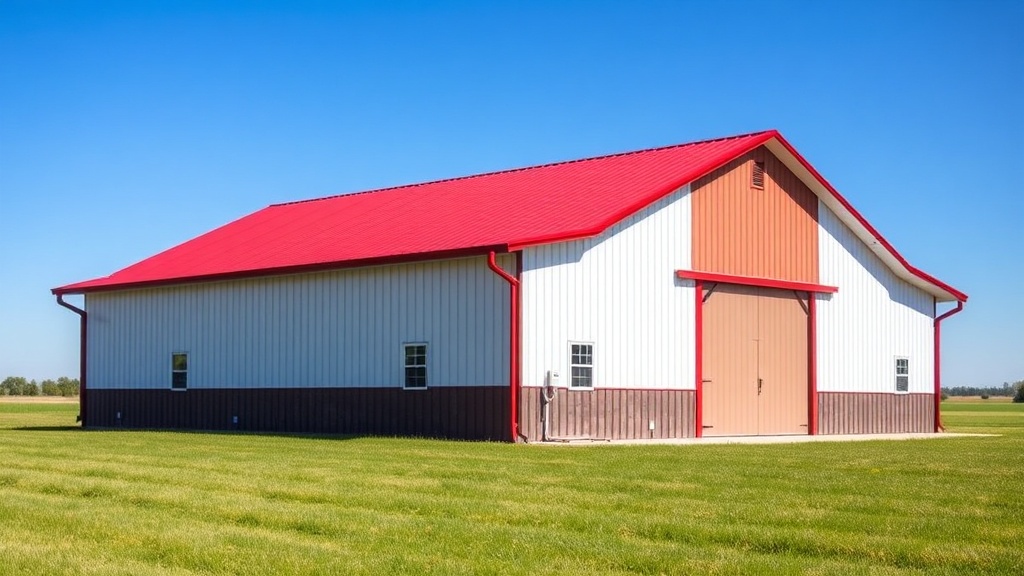
Why Does a Morton 50×80 Building Need a Proper Gutter System?
A Morton Buildings 50×80 pole barn represents a significant investment, typically costing between $45,000 and $75,000 depending on customization and regional labor rates. While the structural frame, roofing, and siding often capture the most attention, the gutter system plays a critical role in protecting that investment. Without properly designed and installed gutters, rainwater falling from a 4,000-square-foot roof surface can erode foundation soil, stain siding panels, and cause moisture intrusion around the base of the structure.
For a building of this scale, standard residential gutters are inadequate. The Morton 50×80 requires a heavy-duty commercial-grade system engineered to handle high volumes of water, particularly if the building is located in a region with heavy seasonal rainfall. This article explains the essential components, installation considerations, and maintenance practices that keep your building dry and structurally sound.
What Are the Essential Components for a Morton 50×80 Gutter System?
A complete gutter system for a Morton 50×80 consists of more than just the troughs. Each component must be sized correctly for the building’s roof area and pitch. Typically, a Morton 50×80 roof has a 4:12 or 5:12 pitch, with a total roof area near 4,200 square feet (including overhangs).
Key components include:
- Gutter troughs: 6-inch or 8-inch K‑style or half-round aluminum or steel. For most Morton 50×80 buildings, 6-inch is the minimum; 8-inch is recommended for high-rainfall zones.
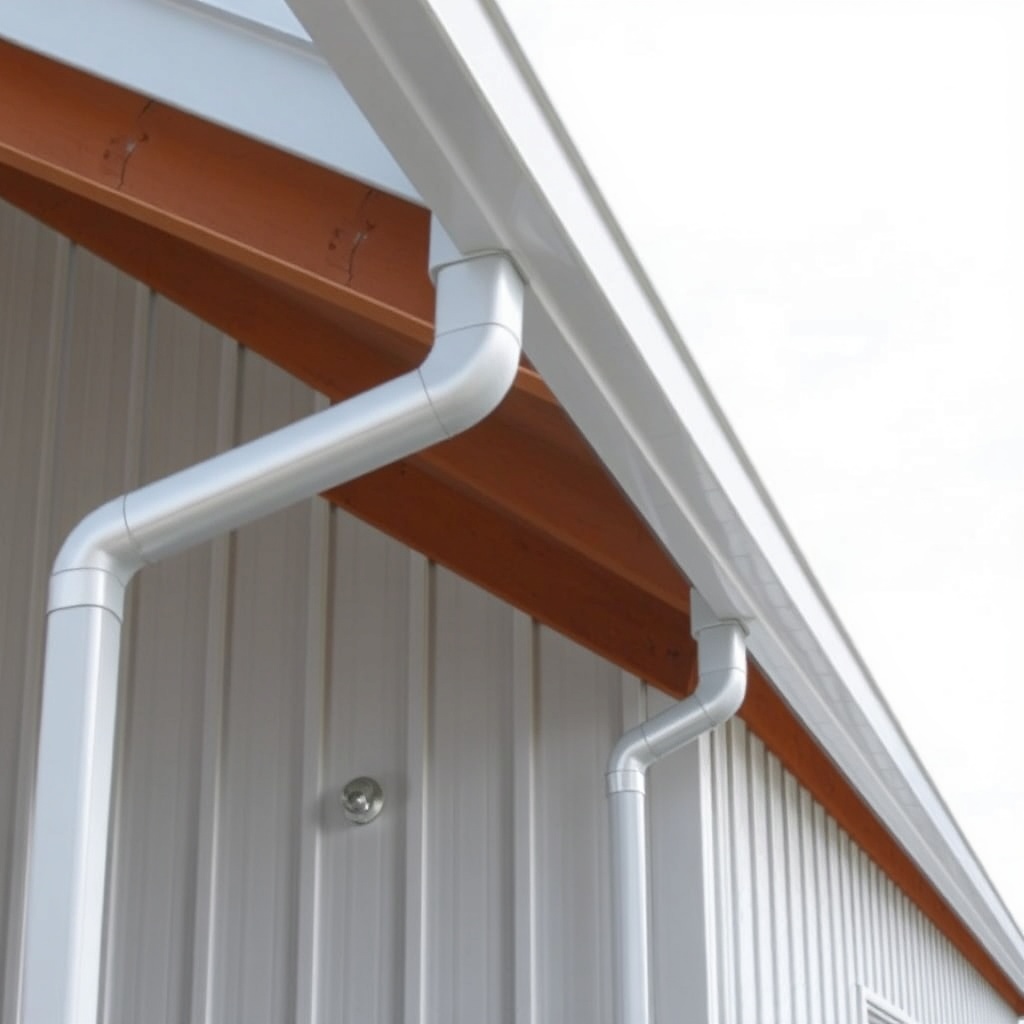
- Downspouts: 3×4-inch or 4×5-inch rectangular downspouts. Plan for at least one downspout per 40 feet of gutter run. A 50×80 building typically requires 6 to 8 downspouts.
- Hangers and brackets: Heavy-duty concealed or strap hangers spaced every 24 inches. Standard residential hangers will sag under the weight of water and debris.
- End caps and miters: Sealed and riveted for durability. Avoid snap-in plastic end caps; use aluminum or steel with sealant.
- Leaf guards: Mesh or solid covers are advisable to prevent clogging from tree debris, especially in rural pole barn locations.
The table below compares the most common gutter options for a Morton 50×80.
| Component Type | Material | Recommended Size | Typical Cost (USD) | Durability Rating |
|---|---|---|---|---|
| Gutter Trough | Aluminum .032″ | 6 inch K‑style | $1.20 – $1.80 per linear foot | Good (20–25 years) |
| Gutter Trough | Steel 26‑gauge | 6 inch K‑style | $2.50 – $3.50 per linear foot | Excellent (30–40 years) |
| Gutter Trough | Aluminum .040″ | 8 inch half‑round | $2.80 – $4.00 per linear foot | Very good (25–30 years) |
| Downspout | Aluminum | 3×4 inch | $0.90 – $1.40 per linear foot | Good |
| Downspout | Steel | 4×5 inch | $1.80 – $2.60 per linear foot | Excellent |
| Leaf Guard | Stainless steel mesh | 5‑inch (for 6‑inch gutter) | $3.00 – $5.00 per linear foot | Excellent |
Prices are approximate and vary by region and contractor. Labor for installation adds $3.00 – $6.00 per linear foot.
How Do I Size Gutters Correctly for a Morton 50×80?
Sizing gutters for a Morton 50×80 is not guesswork. You must calculate the roof’s effective drainage area and account for rainfall intensity in your region. The basic formula:
Roof area (square feet) × pitch factor × rainfall intensity (inches per hour) = required gutter capacity (square inches of cross‑section).
For a 50×80 building (roof area ~4,200 sq ft) with a 5:12 pitch (pitch factor 1.05), in a region with a 10‑year, 5‑minute rainfall rate of 6 inches per hour, the effective area is 4,410 sq ft. According to SMACNA guidelines, a 6‑inch K‑style gutter on a level installation can handle up to approximately 3,800 sq ft of roof area. Therefore, for this building, 6‑inch gutters are borderline, and 8‑inch gutters are preferable. Oversizing downspouts (4×5 inch) and adding extra downspouts also helps prevent overflow.
Consult your local building codes or a professional gutter contractor. Many Morton Buildings warranties require professional installation of gutter systems to remain valid, especially when the building is still under the Warranty Transferability period. Improper gutter sizing can void the warranty on roof edge components.
What Are the Best Installation Practices for Morton 50×80 Gutters?
Proper installation of gutters on a Morton 50×80 is more demanding than on a residential home due to the height (often 14‑16 feet at the eave), the length of runs (80 feet on each side), and the need for precise slope. Follow these best practices:
- Slope gutters 1/16 inch per foot toward downspouts. For an 80‑foot run, this means a drop of 5 inches from high to low end. If the building is level, you may need to use offset hangers or cut the fascia to achieve slope.
- Install hangers every 24 inches maximum. Closer spacing (18 inches) is recommended for steel gutters or in snow‑load areas. Check our guide on Troubleshooting Snow Load on Morton 50×80 Roof: Sagging Prevention for additional considerations.
- Use expansion joints on runs longer than 50 feet. Aluminum expands and contracts with temperature changes. A 80‑foot run of aluminum gutter can expand or contract by nearly 1 inch (0.025 inch per 10‑foot length per 100°F change). Install slip‑joint connectors every 40 feet.
- Secure downspouts with at least two brackets per 10‑foot section. Use expansion joints where downspouts attach to the gutter outlet tube.
- Seal all joints with butyl rubber sealant or silicone. Avoid latex caulk, which becomes brittle and cracks.
- Consider adding gutter heating cables in northern climates to prevent ice dams from forming, which can pull gutters off the fascia.
If you are assembling the building yourself, see our article on DIY Metal Building Assembly: Is It Feasible for a Morton 50×80? for tips on gutter installation timing.
How Do I Prevent Gutter Damage from Snow and Ice?
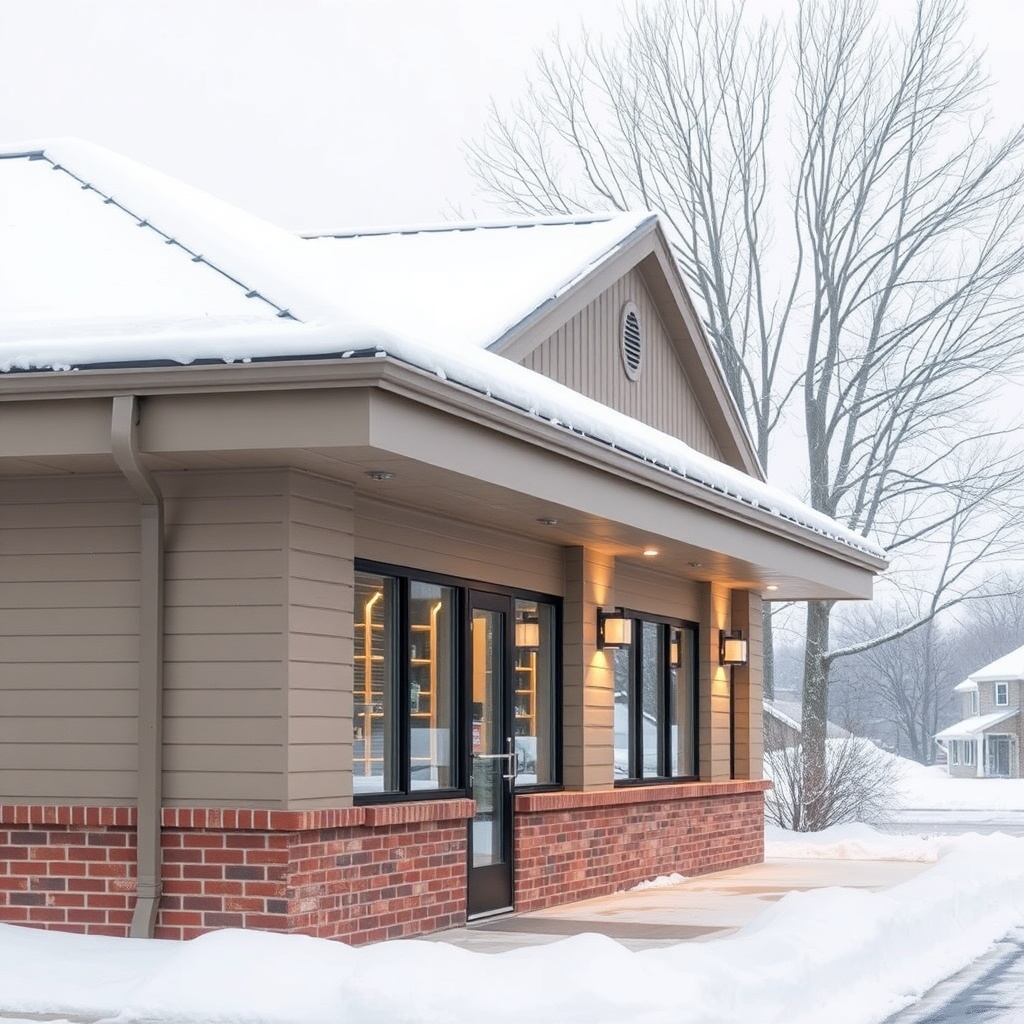
Snow and ice pose the greatest threat to gutters on a Morton 50×80 in northern climates. Ice dams form when snow melts on the warm roof and refreezes at the overhang. This can cause water backup under the roofing panels, damage the fascia, and tear gutters off the building. Here are steps to prevent damage:
- Maintain proper roof overhang. A minimum 12‑inch overhang keeps melted snow away from the gutter line. If your building has less overhang, consider adding drip edge extenders.
- Install a heated gutter cable in a zigzag pattern along the lower 3 feet of roof above the gutter. This maintains a channel for meltwater to flow into the downspout.
- Use heavy‑duty hangers rated for snow loads. Hidden hangers with a 1/4‑inch steel strap are stronger than standard vinyl hangers.
- Add gutter apron flashing under the last row of roof panels to direct water into the gutter and prevent ice wedging behind the gutter.
- Remove snow from the roof after storms with a roof rake, especially if the building is in a region with more than 50 inches of annual snowfall. Refer to our Troubleshooting Snow Load on Morton 50×80 Roof for comprehensive snow management.
What Do Owners Say About Their Morton 50×80 Gutter System?
Owners of Morton 50×80 buildings consistently emphasize that the gutter system is a make‑or‑break detail. Many report that they initially underestimated the cost—spending $1,500 to $3,000 on a basic system, only to upgrade later to heavy‑duty 8‑inch gutters with leaf guards after experiencing overflow or clogging.
Common positive comments include: “The 6‑inch steel gutters handle any downpour we get in the Midwest. After three years, no leaks, no sagging.” Another owner noted, “I went with 8‑inch aluminum and stainless mesh guards. It cost about $2,200 extra, but I never clean gutters, and they work perfectly.”
Negative feedback often relates to downspout placement. One owner commented, “I only had four downspouts, and during a heavy storm, the water overflowed at the middle of the 80‑foot side. I added two more downspouts, and now it’s fine.” Another owner warned, “The gutter contractor used plastic connectors, and they cracked after one winter. I replaced them with metal ones.”
Several owners recommend upgrading to a full seamless gutter system, which reduces the number of joints—a common failure point. Seamless gutters for a 50×80 building typically cost $2,000 to $4,000 installed, depending on material and region.
Frequently Asked Questions
1. What size gutters should I use for a Morton 50×80?
Minimum 6‑inch K‑style gutters, but 8‑inch is recommended for high‑rainfall or snow areas. The roof area of ~4,200 sq ft often exceeds the capacity of standard 5‑inch gutters.
2. How many downspouts does a Morton 50×80 need?
At least one downspout per 40 feet of gutter run. For the 80‑foot sides, two downspouts per side (total of four). For the 50‑foot ends, one downspout each (total of two). Many owners install six to eight downspouts for better water flow.
3. Can I install gutters on my Morton 50×80 myself?
Yes, if you have experience working at heights and with metal fabrication. However, professional installation is recommended for seamless gutters and to maintain warranty coverage. See our DIY Metal Building Assembly guide for more details.
4. How much does a gutter system cost for a Morton 50×80?
Basic 6‑inch aluminum system: $1,200–$2,500 installed. Heavy‑duty 8‑inch steel with leaf guards: $3,000–$5,500 installed. Prices vary by region and contractor.
5. What type of downspout is best for a Morton 50×80?
4×5‑inch rectangular steel or aluminum downspouts are best. They handle high water volume and are less likely to clog than round downspouts. Ensure each downspout has a solid elbow and splash block or underground drain.
6. How do I protect my Morton 50×80 gutters from ice damage?
Install heated gutter cables and ensure roof overhang is at least 12 inches. Use heavy‑duty hangers and add gutter apron flashing. In severe climates, consider installing a Frost Protection for Footings system to prevent frost heave that can shift the building and affect gutter alignment.