Wick Buildings 40×60: Running Conduit for Electrical Wiring During Construction
When planning a Wick Buildings 40×60 post-frame structure, one of the most critical yet often overlooked steps is installing electrical conduit before the concrete slab is poured. Proper conduit placement ensures clean, code-compliant wiring, protects cables from moisture and physical damage, and simplifies future upgrades. This article provides a comprehensive guide to running conduit in a 40×60 building, from layout planning to material choices and installation techniques.
What Type of Conduit Is Best for a Wick Buildings 40×60 Slab?
For in-slab or under-slab electrical runs in a 40×60 pole barn, the most common and durable choice is Schedule 40 PVC conduit. It resists corrosion, is lightweight, and meets most local building codes for buried applications. For areas with heavy machinery or vehicle traffic, Schedule 80 PVC offers thicker walls and greater impact resistance. Flexible metal conduit (FMC) or liquid-tight flexible metal conduit (LFMC) may be used for short transitions from the slab to wall-mounted panels, but rigid PVC remains the standard for long horizontal runs under the concrete.
Electrical metallic tubing (EMT) is sometimes used in exposed wall or ceiling runs, but it is not recommended for direct burial in concrete due to potential corrosion. Always consult local codes before selecting conduit type, as amendments may require specific materials.
For a 40×60 building, you will typically need 1-inch or 1.25-inch diameter PVC conduit for general-purpose circuits (15-20 amps) and 2-inch conduit for feeder cables or sub-panel runs. The following table summarizes recommended conduit sizes based on circuit type and wire count:
| General lighting/receptacles (120V, 15-20A) | 1-inch Schedule 40 | Up to 9 #12 THHN wires |
| Workshop equipment (240V, 30-50A) | 1.25-inch Schedule 40 | Up to 4 #6 THHN wires |
| Welder or compressor (240V, 60-100A) | 2-inch Schedule 40 | Up to 3 #2 THHN wires |
| Sub-panel feeder (100A) | 2-inch Schedule 40 or 80 | 3 #2 AWG + 1 #6 ground |
Using larger conduit than minimum required is always a good practice, as it makes pulling additional wires easier later and reduces voltage drop over long runs.
Where Should Conduit Be Placed in the Slab?
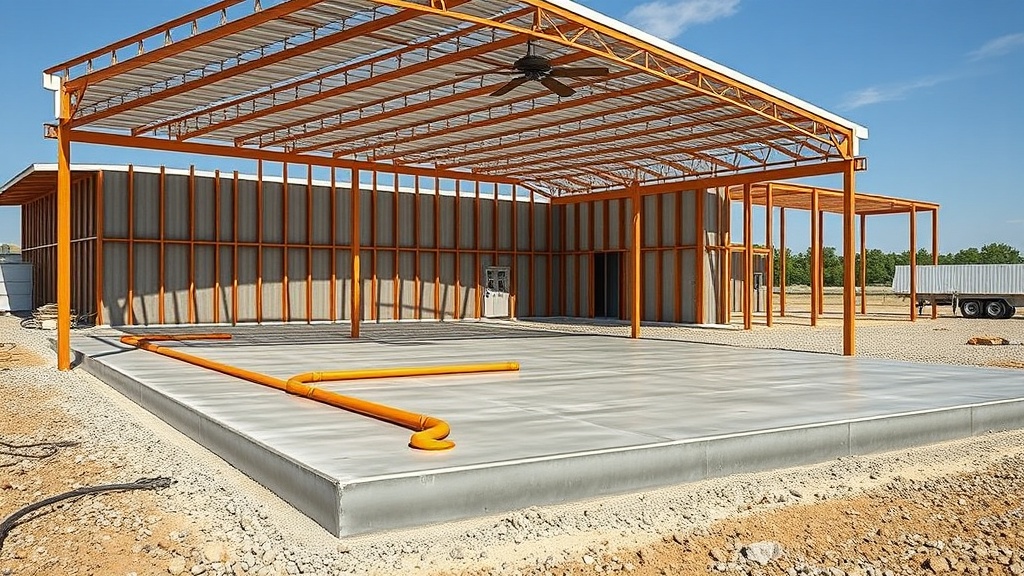
Conduit placement in a Wick Buildings 40×60 slab depends on the intended use of the building. For a general-purpose workshop or garage, plan for at least four to six 1-inch PVC conduits running from the main electrical panel location to various quadrants of the building. Common exit points include:
- Near overhead door openings for future door operators or exterior lighting.
- Along center column lines for ceiling-mounted receptacles or lighting.
- At workbench areas for dedicated tool circuits.
- At the back wall for future welder, compressor, or dust collector outlets.
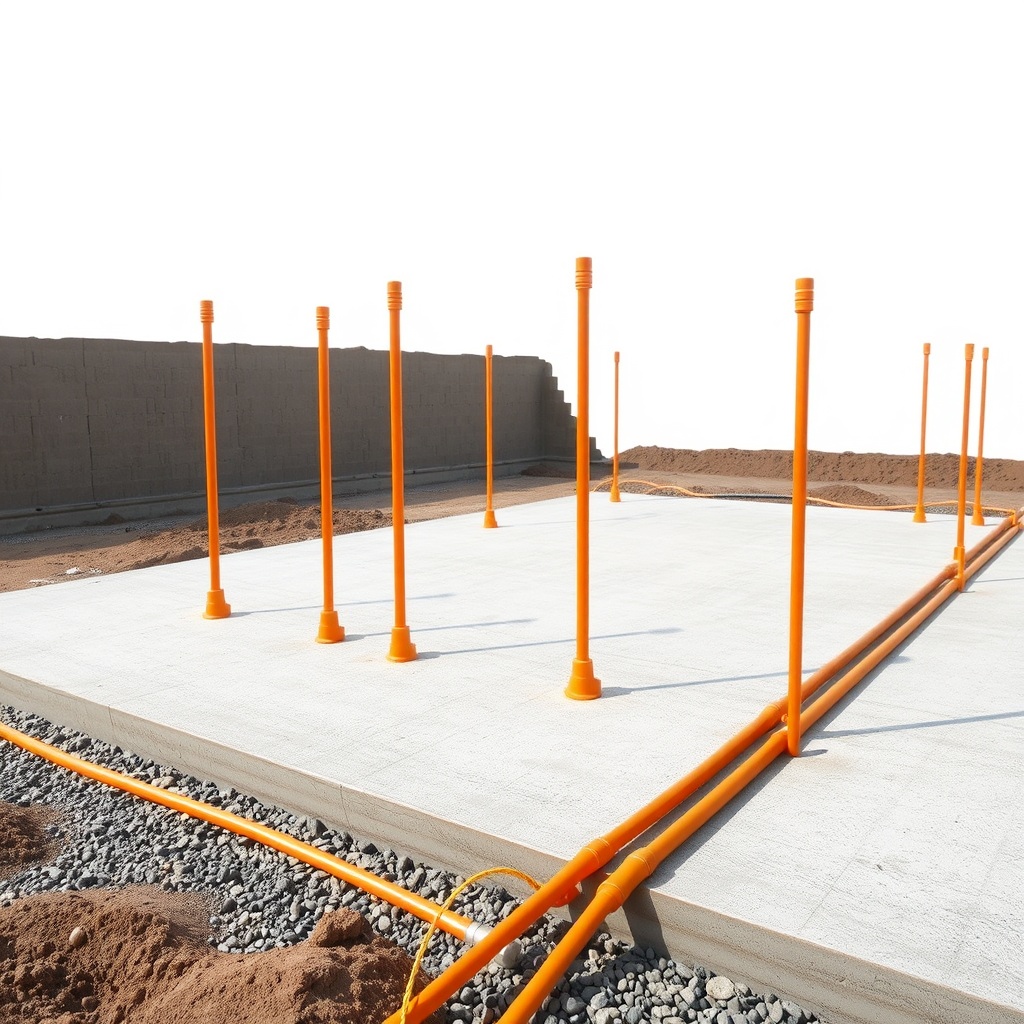
Conduit should be placed at least 2 inches below the top of the slab (or as required by local code) and secured to the reinforcement mesh or gravel base to prevent movement during the pour. Use PVC sweeps (sweep bends) rather than sharp 90-degree elbows to reduce friction when pulling wire. Minimum bend radius for PVC conduit is typically six times the conduit diameter.
All conduits should be sealed temporarily with duct tape or conduit plugs before the pour to prevent concrete from entering. Mark conduit locations on the slab layout drawing or with spray paint on the gravel base so the concrete contractor can avoid damaging them during finishing.
How to Plan Conduit Layout for a 40×60 Pole Barn?
Begin by mapping out the electrical panel location, typically on an interior wall near the main service entrance. On a 40×60 building, a 200-amp panel with a 100-amp sub-panel is common for mixed-use scenarios. From the panel, consider running two 2-inch conduits horizontally across the slab to serve as “trunk lines” that feed smaller 1-inch home runs at various intervals.
A suggested layout includes:
- A 2-inch conduit running east-west along the 60-foot length from the panel to the far end, with 1-inch stub-ups every 12 to 16 feet for future circuits.
- A second 2-inch conduit running north-south along the 40-foot width for cross-receiving power to workstations or equipment bays.
- Individual 1-inch conduits from the panel to specific fixed-equipment locations (e.g., welder, air compressor, EV charger).
For post-frame construction vs stick built which is better, conduit placement is simpler in post-frame buildings because open spans and exposed columns allow easier routing of surface-mounted conduit after the slab is poured. However, for a clean look with no exposed wiring, in-slab conduit is the gold standard.
Consider future needs: even if you don’t need a 240V circuit today, running an empty 2-inch conduit to a few locations means you can add one later without cutting concrete. Also, run separate conduits for low-voltage (data, security, audio) to avoid interference with power wiring.
What Are the Code Requirements for Conduit in a Pole Barn Slab?
The National Electrical Code (NEC) governs conduit installation in agricultural and commercial buildings like a 40×60 pole barn. Key requirements include:
- NEC 300.5: Minimum cover depth for buried conduit under a slab is 4 inches for PVC (Schedule 40 or 80) and 6 inches for metal conduit. However, concrete slabs less than 4 inches thick may require deeper burial in the fill below.
- NEC 352.30: PVC conduit must be secured at intervals not exceeding 3 feet and within 3 feet of each termination point.
- NEC 300.18: Conduit must be installed complete between pull points before pulling wire, except for short lengths.
- NEC 225.30: For outbuildings, feeder conductors must have a disconnecting means and proper grounding, which often requires separate conduit runs for grounding electrodes.
Local amendments may be stricter, especially in areas with heavy frost heave. In regions with deep frost lines, plan for conduit to enter the building below the frost depth to prevent soil movement from shearing the conduit. For slab-on-grade designs common with gravel base vs concrete slab comparison, the conduit enters from below, so the gravel base provides a clean path.
Always obtain required permits and schedule inspections for the conduit rough-in before the slab is poured. This ensures compliance and avoids costly rework.
How to Run Conduit Through Post-Frame Walls?
In Wick Buildings 40×60 post-frame construction, walls are typically built with 6×6 or 8×8 treated posts spaced 8 to 12 feet apart, with metal or wood girts. For conduit that transitions from the slab to above-grade walls, use one of these methods:
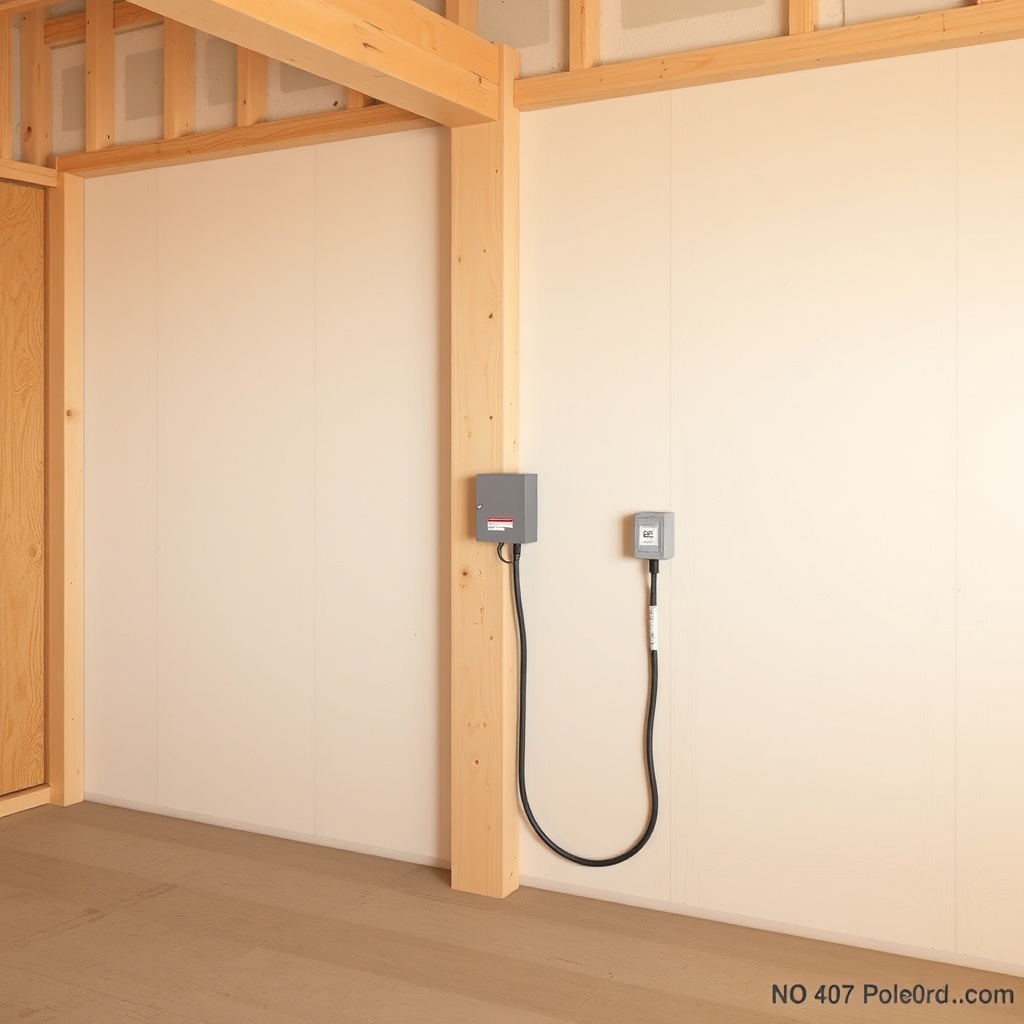
- Slab stub-up: Bring conduit up through the slab at the planned wall location, then turn it horizontally into a wall cavity or against the post. Use a PVC LB (L-body) conduit body to make the 90-degree turn. Mount the LB before framing to allow enough clearance for conduit straps.
- Surface mount: If slab conduit wasn’t installed, run conduit on the surface of the wall or ceiling using EMT or PVC. This is more visible but easier to retrofit.
- Between girts: In post-frame walls with horizontal steel girts, conduit can be run between the girt and the metal siding if installed before siding goes on. This method is clean but requires careful planning to avoid screws piercing the conduit.
When running conduit through exterior walls, seal the penetration with appropriate caulk or gaskets to maintain the building’s weather barrier. For Wick Buildings 40×60: What Steel Gauge for Roof Panels?, remember that wall conduit should not interfere with roof purlins or trusses, so keep runs below ceiling level.
For exposed interior conduit, use EMT with compression fittings for a professional appearance. Support conduit every 10 feet (for 1-inch EMT) or closer for larger sizes.
What Are Common Mistakes When Installing Conduit in a 40×60 Building?
Avoid these frequent errors during conduit installation:
- Not planning for future capacity: Installing only the minimum conduit for current needs leaves no room for expansion. Always oversize conduit by at least one trade size.
- Using too many 90-degree bends: NEC limits the total bends in a single conduit run to 360 degrees (four 90-degree bends). More bends make wire pulling difficult or impossible. Use sweeps and offset bends instead.
- Forgetting to seal conduit ends: Concrete slurry can flow into open conduits during the pour, hardening and blocking the entire run. Use plugs or heavy tape.
- Inadequate support in slab: Conduit that floats up during the pour may become exposed at the slab surface, creating a trip hazard or needing break-out repairs.
- Ignoring bonding requirements: Metal conduits in concrete must be bonded to the grounding system. PVC does not require bonding but must have an equipment grounding conductor pulled with the circuit.
Also consider that Wick Buildings 40×60: Vapor Barrier Installation Guide for Concrete Slab recommends placing conduit above the vapor barrier to prevent moisture wicking into the wiring system. If conduit must pass through the barrier, seal the penetration with mastic or a gasket to maintain the barrier’s integrity.
What Owners Say About Running Conduit in Their 40×60 Wick Buildings
Owners who invested time in conduit planning during the construction phase consistently highlight several benefits:
- Future-proofing: “I ran four 2-inch PVC conduits across the entire 60-foot length. Two years later, when I needed to add a 240V circuit for a lathe, I just pulled wire through an empty conduit. Saved me from cutting the slab.”
- Clean aesthetics: “I hate seeing wires stapled to posts. Running everything under the slab with stub-ups at each work area gives my shop a finished, professional look.”
- Cost savings: “My electrician estimated that doing conduit in-slab during the pour saved about $1,500 compared to surface-mounting EMT afterward. Plus, no risk of hitting conduit with screws.”
- Code compliance: “The inspector checked my conduit layout before the pour and was impressed. He said most people forget the bonding jumper, but I had it in place.”
Some owners mention that coordinating with the concrete crew was essential. “I had to be on site the day of the pour to make sure the conduit markers weren’t covered. One near-miss taught me to use bright flagging tape on every stub-up.”
For those considering Wick Buildings 40×60: Ridge Ventilation vs Turbine Vents for Attic Airflow, running conduit for attic ventilation fans or exhaust fans before the roof panels go up is another smart time to act.
Overall, the consensus among 40×60 owners is that the extra effort during construction pays off many times over in utility, safety, and resale value.
Frequently Asked Questions
Can I run Romex (NM-B) cable directly in concrete slab conduit?
No. Romex is not rated for wet or damp locations and cannot be used in underground or in-slab conduit. Use individual THHN/THWN-2 conductors or XHHW-2 wire, which are moisture-resistant and rated for conduit installation.
How deep should conduit be buried under the slab?
NEC 300.5 requires minimum 4 inches of concrete cover over PVC conduit. If the slab is only 4 inches thick, the conduit must be in the middle or near the bottom of the slab, not at the surface. For shallow pours, consider using deeper gravel base to meet cover requirements.
Do I need a separate conduit for the ground wire?
No. An equipment grounding conductor (bare or green wire) can be run in the same conduit as the circuit conductors. However, for sub-panels, the neutral and ground must be separated, so use a separate ground bar in the panel and a ground rod if required.
What size conduit do I need for a 100-amp sub-panel feeder?
For a 100-amp sub-panel in a 40×60 building, use 2-inch Schedule 40 PVC conduit with three #2 AWG THHN conductors and one #6 AWG bare copper ground. The 2-inch conduit provides enough fill capacity and allows easier pulling.
How do I pull wire through long conduit runs (over 100 feet)?
Use a fish tape or a pulling vacuum system for long runs. Lubricate the wires with approved cable pulling lubricant (e.g., polywater) to reduce friction. For runs over 200 feet, consider using larger conduit or installing a pull box mid-run.
Can I add conduit after the slab is poured?
Yes, but it is more difficult and expensive. You can surface-mount EMT on walls and ceiling, or if needed, core-drill the slab for a new stub-up. Running conduit after the fact typically costs 2-3 times more than doing it during pour. For a 40×60 building, in-slab conduit is almost always worth the investment.