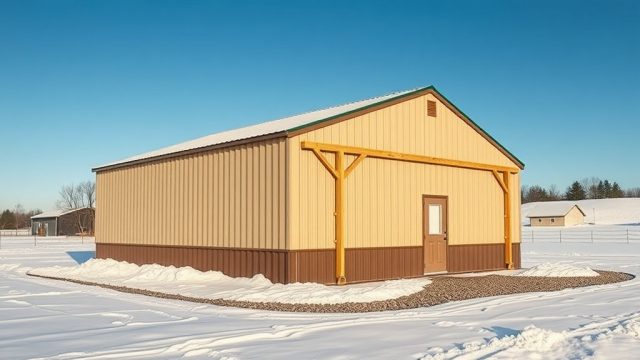
Why Does Foundation Anchoring Matter for a Morton Buildings 50×80?
A Morton Buildings 50×80 pole barn represents a significant investment, typically ranging from $45,000 to $85,000 depending on customization and local labor rates. The foundation anchoring system is the single most critical factor determining whether that investment stands for decades or requires costly repairs within the first few years. Two primary approaches dominate the market: pressure-treated skids and post-in-ground foundations, each with distinct performance characteristics, cost structures, and long-term implications for the structure’s stability.
Understanding the difference between these two anchoring methods directly impacts everything from the building’s ability to resist wind uplift to its resistance against frost heave and moisture damage. This article provides a detailed comparison to help owners make an informed choice for their specific site conditions and budget constraints.
What Exactly Is a Pressure-Treated Skid Foundation for a 50×80?
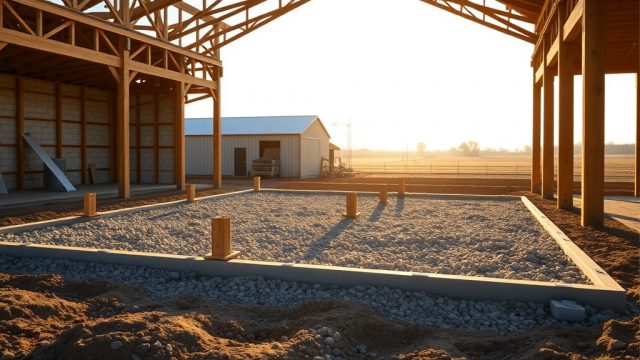
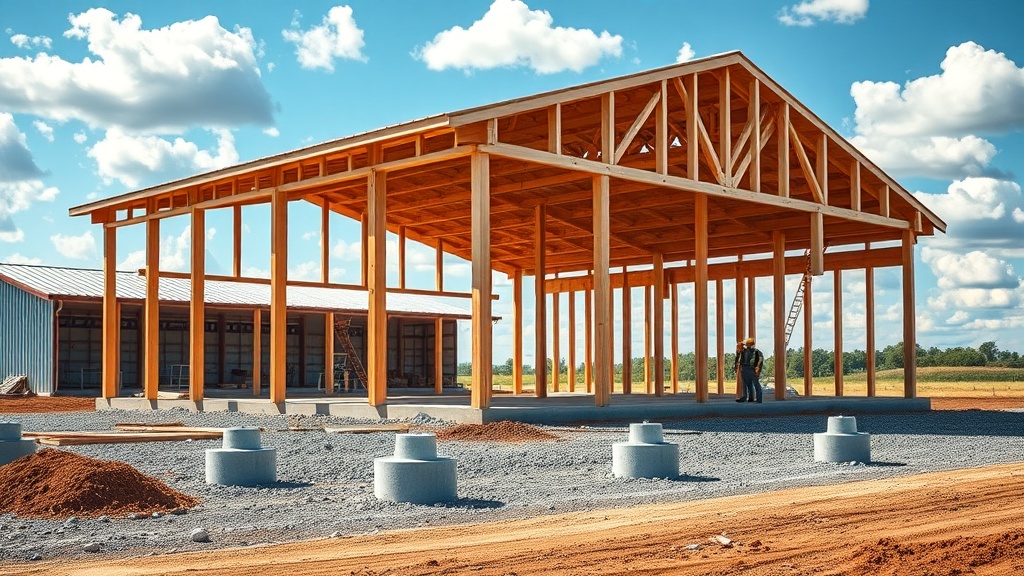
Pressure-treated skid foundations consist of large, chemically treated lumber beams placed directly on a prepared gravel base. These skids are typically 6×6 or 6×8 timbers, spaced 8 to 10 feet apart, running the full length of the building. The skids rest on a compacted gravel pad that provides drainage and load distribution. The pole barn’s structural columns are then bolted or bracketed onto these skids.
For a Morton Buildings 50×80, this system offers several advantages. Installation is faster because no deep excavation is required beyond leveling the gravel bed. The total cost for a pressure-treated skid foundation on a 4,000-square-foot building ranges from $8,000 to $12,000, excluding the gravel pad preparation. However, the system has inherent limitations. The skids are above grade, meaning the building sits slightly elevated. This can create a thermal break issue where cold air circulates beneath the structure, increasing heating costs in colder climates. Additionally, the treated lumber has a service life of approximately 20 to 30 years before degradation begins, even with proper treatment.
What Defines a Post-in-Ground Foundation for This Building Size?
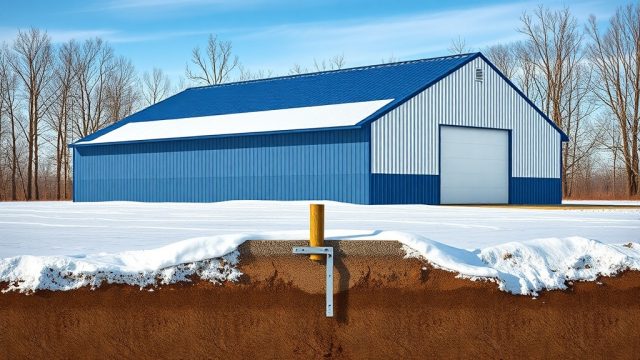
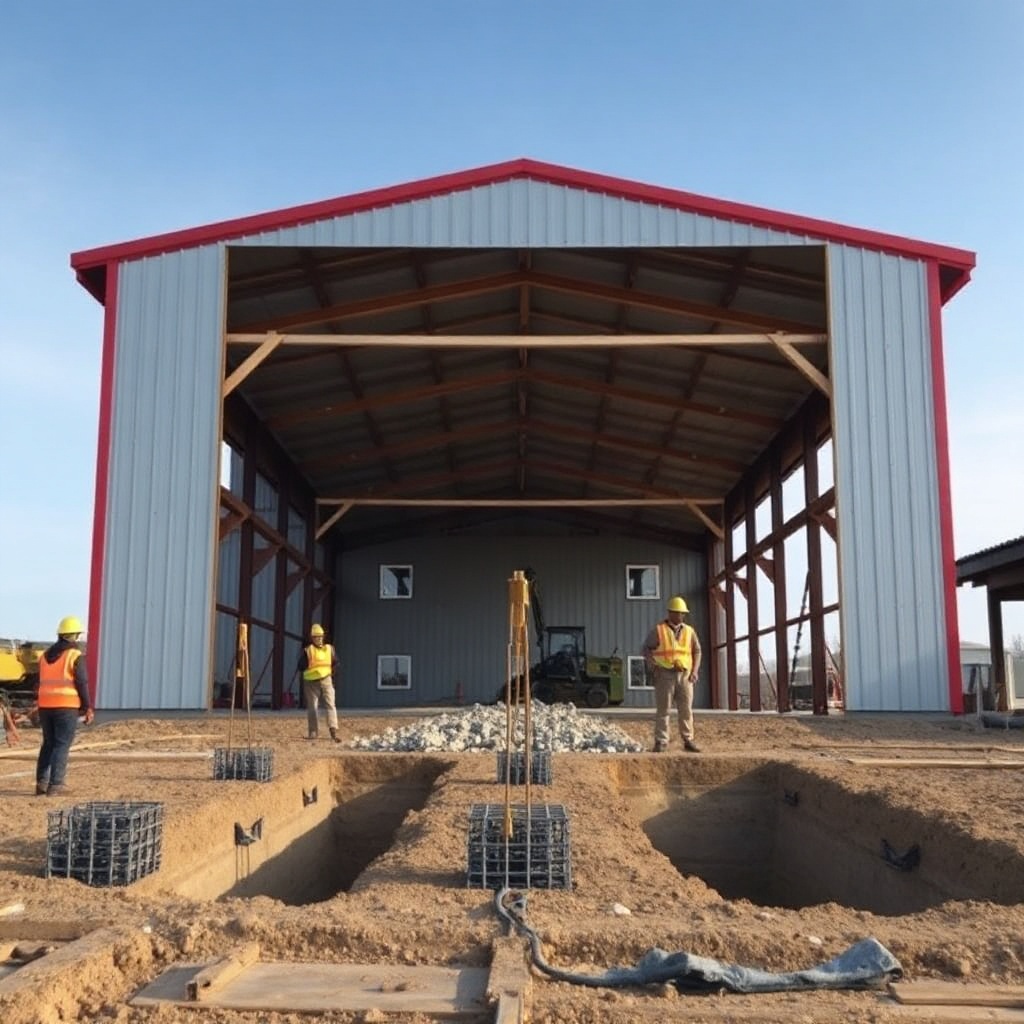
Post-in-ground foundations, also known as embedded post foundations, involve digging holes 3 to 4 feet deep (or below the frost line in colder regions) and setting the structural columns directly into concrete. For a Morton Buildings 50×80, this typically means 18 to 24 holes, each 24 to 30 inches in diameter, depending on local soil conditions and snow loads. The concrete is poured around the post, forming a monolithic anchor that resists both vertical loads and lateral forces from wind or seismic activity.
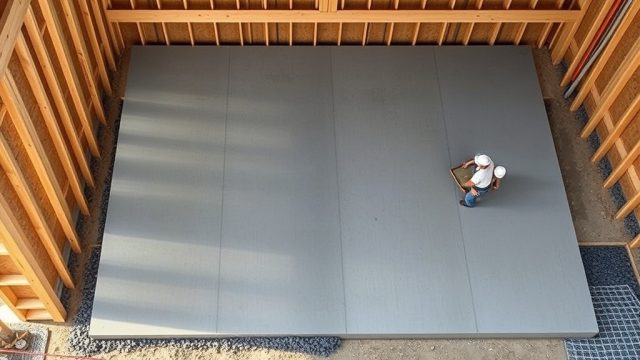
The cost for a post-in-ground foundation on a 50×80 building ranges from $15,000 to $22,000, including concrete, excavation, and labor. This method provides superior resistance to wind uplift because the concrete mass acts as a dead weight anchor. It also eliminates the thermal bridging issue seen with skid foundations since the posts are embedded in the ground and the concrete slab or floor is poured independently. However, the installation takes longer, typically 5 to 7 days for the digging and pouring phase, and requires careful attention to concrete curing in cold weather.
How Do Foundation Costs Compare for a Morton Buildings 50×80?
The following table provides a detailed cost comparison between the two foundation anchoring systems for a standard Morton Buildings 50×80 with 12-foot sidewalls, 4/12 roof pitch, and typical Midwest soil conditions. Prices include materials, labor, and equipment for a contractor-installed system but exclude site preparation like grading or tree removal.
| Foundation Component | Pressure-Treated Skids | Post-in-Ground |
|---|---|---|
| Excavation & Gravel Base (6 inches compacted) | $2,500 – $3,500 | $3,000 – $4,500 |
| Pressure-Treated Lumber (6×6 or 6×8 skids) | $4,000 – $6,000 | N/A |
| Concrete (18-24 holes, 24″ diameter, 48″ deep) | N/A | $6,000 – $9,000 |
| Rebar & Brackets/Anchors | $800 – $1,200 | $1,200 – $1,800 |
| Labor (3-person crew, 3-5 days skids / 5-7 days posts) | $3,500 – $5,000 | $5,500 – $7,500 |
| Total Estimated Cost | $10,800 – $15,700 | $15,700 – $22,800 |
| Anchoring Strength (Wind Uplift Resistance) | Moderate (bracket-dependent) | High (concrete mass) |
| Service Life (Before Major Repairs) | 20-30 years | 40-60+ years |
| Frost Heave Risk | Medium (skids can shift) | Low (below frost line) |
| Thermal Performance (Floor Insulation) | Poor (air gap beneath) | Good (concrete slab contact) |
As the table illustrates, post-in-ground foundations carry a 40-50% premium upfront, but they offer significantly longer service life and structural performance. For owners planning to keep the building for more than 30 years or in areas with high wind zones, the premium is often justified. For short-term use or where budget is the primary constraint, pressure-treated skids can be a viable alternative when properly maintained.
Which Anchoring Method Handles Snow Load and Frost Heave Better?
Snow load and frost heave are the two most common environmental forces that challenge pole barn foundations in northern climates. A Morton Buildings 50×80 in regions with 40 psf (pounds per square foot) or higher snow loads requires an anchoring system that can transfer those vertical forces into the ground without settlement or tilting. Post-in-ground foundations excel here because the concrete collar around each post distributes the load over a larger soil footprint and prevents the post from being pushed upward by frost action.
Pressure-treated skids, by contrast, rest on a gravel base that can shift during freeze-thaw cycles. If the gravel pad is not properly compacted or if drainage fails, the skids can settle unevenly, causing the building to rack and doors to stick. Frost heave can lift sections of the skid foundation, creating gaps underneath that invite rodents and moisture. For owners in regions like the Upper Midwest or New England, local building codes often mandate post-in-ground foundations for any structure over 2,000 square feet because of these risks. Proper concrete footing depth is critical; for a 50×80, 48 inches below grade is standard for frost-free performance.
The thermal performance also differs significantly. A skid foundation leaves a cold air gap between the building and the ground, which can increase heating costs by 15-25% compared to a post-in-ground system with a properly insulated concrete floor. Owners planning to use the building for heated workshops or living spaces should strongly consider post-in-ground foundations to avoid these ongoing costs.
What Do Owners Say About These Foundation Systems?
Feedback from owners of Morton Buildings 50×80 pole barns over the past 15 years reveals a clear preference pattern. Owners who chose pressure-treated skids typically cite lower upfront cost and faster construction as primary motivations. Many report satisfaction for 10 to 15 years, but then begin noticing minor issues such as door misalignment, floor dampness, or skid rot at contact points with the gravel. One owner from Wisconsin stated, “The skids saved me $7,000 initially, but by year 18 I had to replace the two end sections because of rot. That cost me $3,000 plus labor. I wish I had gone with concrete posts from the start.”
Owners who opted for post-in-ground foundations almost universally report fewer issues over the building’s life. A Minnesota farmer with a 50×80 machine shed said, “The concrete posts cost more, but I’ve had zero foundation problems in 25 years. No sagging, no heave, no rodent problems. The building is as solid as the day it was built.” Another owner in Colorado noted that post-in-ground anchoring gave him peace of mind during high-wind events, adding, “My neighbor’s skid-mounted barn shifted two inches after a 70 mph gust. Mine didn’t budge.”
The trade-off remains clear: skid foundations offer lower initial investment but require maintenance and have a finite lifespan, while post-in-ground foundations represent a long-term asset that typically requires no major structural repairs for decades. For owners planning to sell their property within 15 years, skids might suffice; for multigenerational use, the premium for concrete posts is almost always recovered through reduced repairs and higher resale value.
Frequently Asked Questions
1. Can I convert a Morton Buildings 50×80 from skids to post-in-ground later?
Yes, but it is labor-intensive and expensive. The building must be lifted with jacks, temporary supports installed, and new holes dug and poured. Costs typically exceed $20,000 for a 50×80, making it more economical to choose the right foundation initially.
2. Does Morton Buildings warranty cover foundation systems?
Morton Buildings offers a 50-year limited warranty on their buildings, but it specifically excludes damage caused by foundation movement or improper site preparation. The foundation is considered site work and is the owner’s responsibility to design and install per local codes.
3. How deep must concrete footings be for a post-in-ground 50×80?
In most areas, 48 inches below grade is standard to reach below the frost line. For locations with frost depths exceeding 48 inches, consult local building codes. The article on concrete footing depth provides detailed recommendations.
4. Can I use a combination of both foundation types?
Yes, some owners use pressure-treated skids for interior partitions or lean-to additions, while using post-in-ground for the main structural columns. This hybrid approach can reduce costs for non-load-bearing sections but requires careful engineering to ensure load paths are properly connected.
5. What is the best way to insulate a floor with a skid foundation?
Rigid foam insulation (2-4 inches of XPS or EPS) can be placed between the skids before pouring a concrete slab. However, thermal bridging at the skids themselves reduces overall effectiveness. For superior performance, consider full-depth concrete slab on grade with post-in-ground foundations, as discussed in the insulation comparison article.
6. Do overhead door sizes change based on foundation type?
Not directly, but the foundation must provide adequate anchoring for door tracks and headers. Skid foundations require additional bracing at door openings, while post-in-ground foundations naturally support heavy doors. Refer to the overhead door sizing guide for specific recommendations on clearances and structural supports.