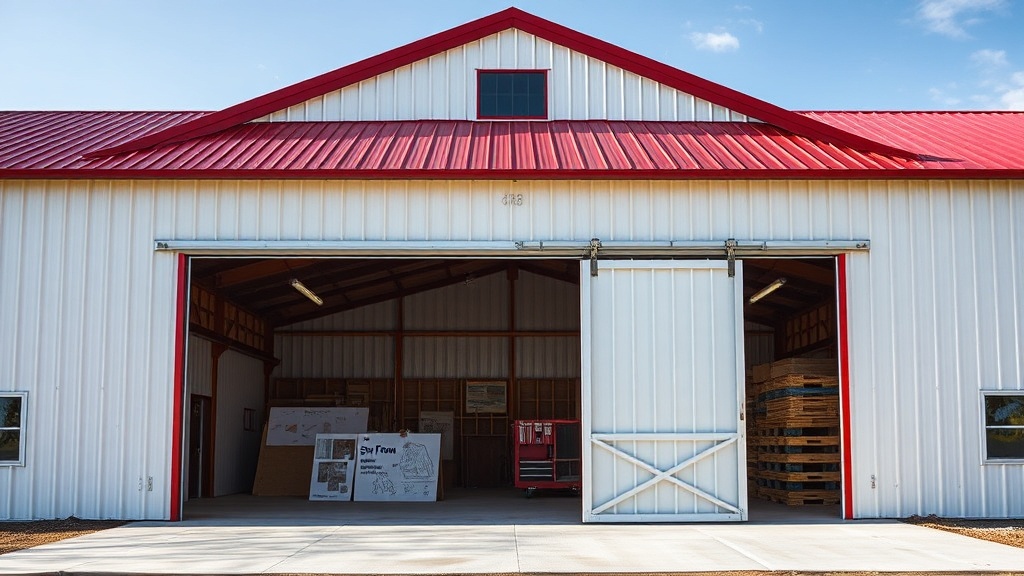
Insulating a Morton 50×80 Pole Barn: Spray Foam vs Fiberglass Batt
For owners of a Morton Buildings 50×80 pole barn, choosing the right insulation is a decision that affects energy bills, structural longevity, and interior comfort for decades. This article lays out the practical differences between spray foam and fiberglass batt insulation for this specific building size, each with its own cost, performance, and installation trade-offs.
Why Does a 50×80 Morton Barn Need More Than Basic Insulation?
A 50×80 structure offers 4,000 square feet of floor space, but with typical 12 to 16-foot sidewalls, the total surface area for heat transfer is substantial. A Morton barn’s steel siding and roof absorb and radiate heat aggressively, especially in direct sun. Without proper insulation, the interior can swing from freezing in winter to oven-like in summer, stressing roof panel fasteners and increasing condensation risk on the steel frame.
Insulation also directly influences the choice of overhead door climate sealing. A well-insulated barn holds temperature longer, reducing strain on heating or cooling equipment and cutting monthly utility costs by as much as 30% compared to an uninsulated building.
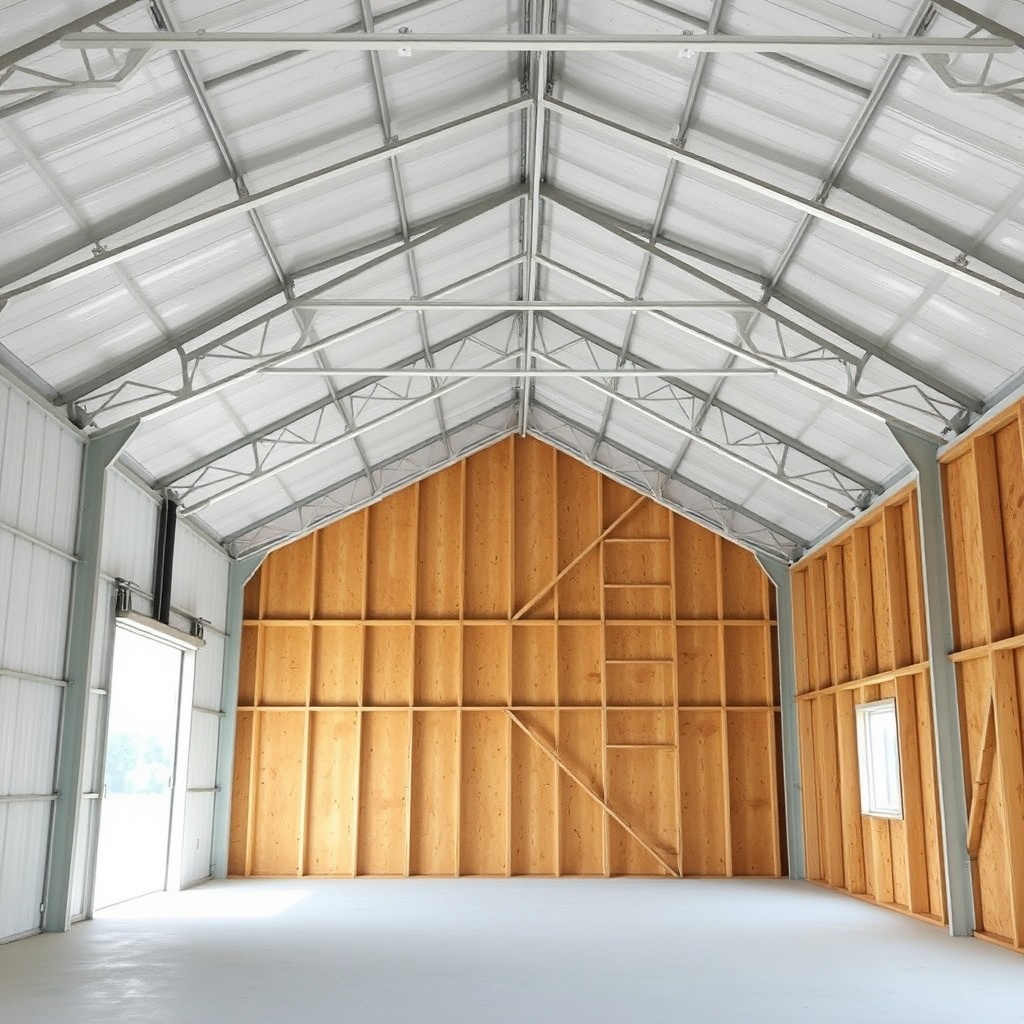
Spray Foam Insulation for a 50×80: Closed-Cell vs Open-Cell?
Spray foam divides into two main types for pole barns: closed-cell (rigid, high R-value per inch) and open-cell (softer, lower R-value, but cheaper). For a 50×80 Morton barn, closed-cell at 2 inches (approximately R-13 to R-14) is a common recommendation because it seals air leaks at every joint and provides a vapor barrier that prevents moisture from reaching the steel siding.
Open-cell foam applied at 3.5 inches yields around R-13 as well, but because it is permeable, it usually requires a separate vapor barrier (like a foil facing) to prevent moisture from migrating into the wall cavity. A typical 50×80 with 12-foot sidewalls requires around 3,200 square feet of wall coverage and 4,000 square feet of roof deck. Closed-cell spray foam for this entire envelope runs roughly $6,500 to $9,000 in 2025 USD, including labor. Open-cell is about 40% less, but long-term condensation risks can offset initial savings.
Note that spray foam must be applied by certified contractors who understand steel-to-wood transitions in Morton buildings. Poor adhesion to painted steel girts can lead to delamination and gaps.
Fiberglass Batt Insulation: Cost-Effective or False Economy?
Fiberglass batts are the classic budget option. For a 50×80 barn, faced batts (R-19 for 2×6 walls, R-30 for roof) can be purchased for about $1,200 to $1,800 in material. However, labor for installation on a pole barn’s exposed framing is different from a house. You must staple the paper face to the inside of girts, leaving a continuous air gap between the batt and steel siding. This is crucial to avoid condensation that rusts fasteners and damages the steel.
The big drawbacks: gaps at every corner, around electrical boxes, and at the top of walls where purlins meet trusses are very common. Studies show that even well-installed fiberglass in a pole barn loses 20-30% of its rated R-value due to air movement. Over the lifespan of a Morton 50×80, the increased heating and cooling cost can exceed the upfront savings versus spray foam. For a workshop or seasonal storage, fiberglass is a fine choice. For a conditioned living space or heated garage, the performance gap is significant.
| Issue Area | Spray Foam (Closed-Cell) | Fiberglass Batt |
|---|---|---|
| R-Value per inch | 6.5–7.0 | 3.1–3.7 |
| Air sealing effectiveness | Excellent (seals all gaps) | Poor (gaps common at edges) |
| Total installed cost (50×80, 12′ walls + roof) | $7,500–$9,000 | $3,500–$5,000 (materials + labor) |
| Condensation risk if no vapor barrier | Low (acts as its own vapor barrier) | Moderate-high (requires separate barrier) |
| Reusability during modifications | Not reusable | Partially reusable |
| Moisture sensitivity | Not affected | Rots, loses R-value when wet |
| Fire resistance | Requires thermal barrier (1/2″ drywall) in living areas | Naturally non-combustible but facing burns |
| Typical R-value achieved (walls) | R-13 to R-14 (2″) | R-19 (actual effective ~R-13 to R-15) |
What About the Concrete Footing and Slab Edge Insulation?
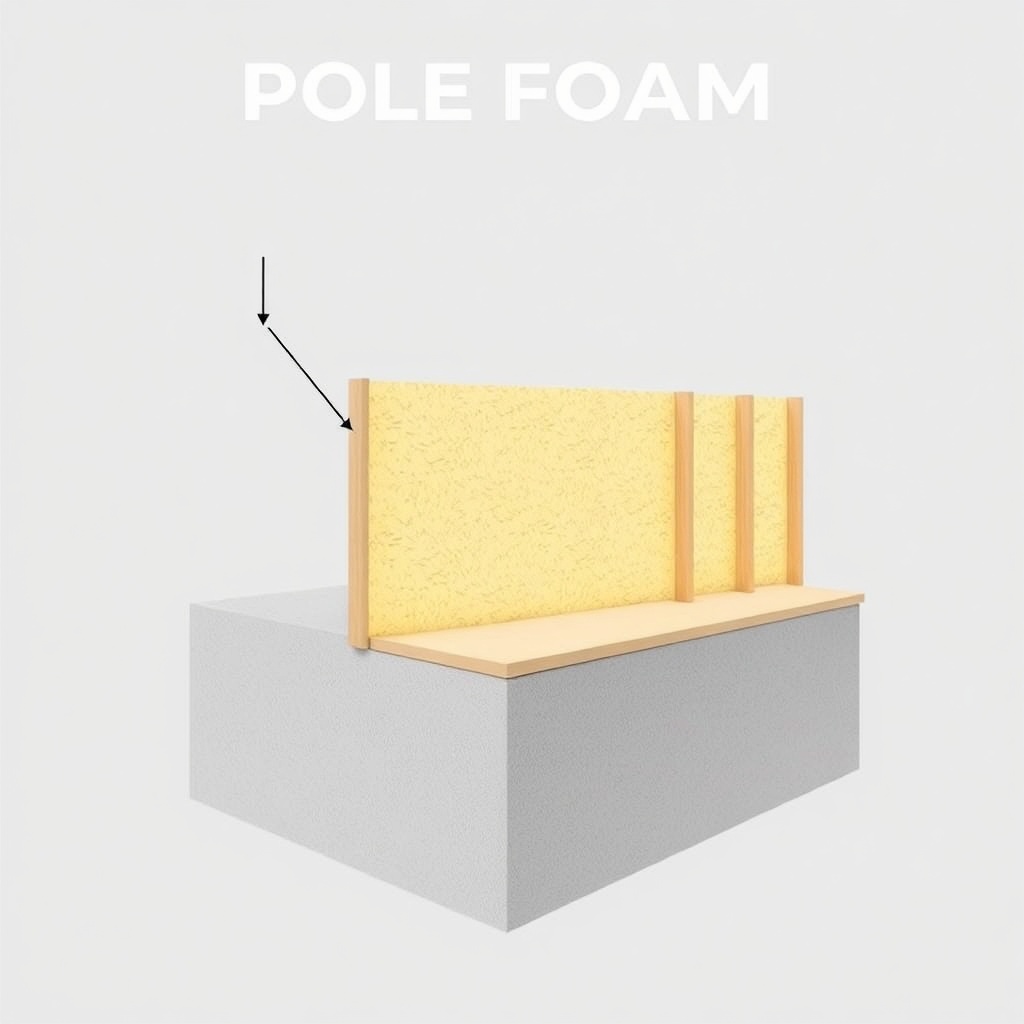
Many owners overlook that insulating the perimeter of the slab is equally important for a 50×80 Morton barn. A 4-inch concrete slab on grade loses heat rapidly at the edges. For a building this size, 2-inch rigid XPS foam board (R-10) placed vertically against the foundation perimeter reduces heat loss and prevents frost heave near the footing depth. This is especially critical if you plan to heat the barn above 50°F (10°C) in winter. A slab edge insulation retrofit after the barn is built is messy and expensive, so consider it during initial construction.
If using spray foam on walls, it can be extended down over the stem wall to tie into slab insulation, creating a continuous thermal envelope. Fiberglass cannot seal this transition effectively. The cost for slab edge insulation on a 50×80 perimeter (260 linear feet) with XPS board, adhesive, and gravel protection is around $500–$800 in materials.
How Does Roof Insulation Affect Snow Load and Sagging Risks?
Insulation choice directly affects roof temperature and snow melt patterns. A well-insulated roof keeps the underside cold, meaning snow accumulates and melts slowly, which is safer for standing seam or corrugated panels. A poorly insulated roof lets heat escape, causing uneven snow melt, ice dams, and potential sagging under concentrated loads.
Spray foam applied directly to the underside of the roof panels creates a conditioned attic space. This prevents condensation on the panel underside (a leading cause of corrosion) and maintains uniform temperature across the trusses. Fiberglass batts installed between purlins with an attic vent above (a cold roof design) work well in dry climates but can trap moisture against the steel in humid regions. For a 50×80 roof with 4:12 pitch, the surface area is roughly 4,720 square feet, so any condensation issue affects a large area.
What Owners Say
“I went with fiberglass in my 50×80 Morton workshop to save money upfront. After two winters, my propane heater runs almost double the time compared to my neighbor who used closed-cell foam. I wish I had spent the extra $3,000 from the start.” —Mike, central Wisconsin
“Closed-cell spray foam was $8,200 for my 50×80 with 14-foot walls. The barn stays 70°F in winter with a 40,000 BTU heater running half time. No condensation, no critters getting inside, and the building feels solid. It also cut down the wind noise dramatically.” —Linda, western Michigan
“I insulated just the living quarters (about 1,200 sq ft) with open-cell foam and left the rest of the barn as unheated storage. The foam did a great job sealing the living space, but I regret not doing the whole envelope—now the uninsulated part is a dust collector and usually 10 degrees colder.” —Gary, upstate New York
Frequently Asked Questions
Can I install fiberglass batts myself to save money on my 50×80 Morton barn?
Yes, if you have experience working with pole barn framing. You’ll need to cut batts precisely between girts and purlins, staple the paper faces every 6 inches, and seal all edges with caulk or tape. Expect the job to take two people about 40–50 hours. Improper installation leads to air gaps and condensation, so test with a thermal camera after finishing.
Does spray foam void Morton Buildings’ warranty?
No, but you must ensure the foam contractor does not damage the steel panels or framing. Many Morton dealers accept spray foam as long as it is applied over a clean, dry surface and does not trap moisture against the steel. Always get written approval from your Morton sales representative before proceeding.
What is the payback period for spray foam versus fiberglass?
For a heated 50×80 barn, the payback period is typically 5–8 years in colder climates (Zone 5 and above). In milder climates, payback may extend to 10–12 years. Factor in lower humidity and less rust repair over 30 years, and foam often wins on total cost of ownership.
Should I insulate the roof or walls first?
Start with the roof and ceiling. Up to 40% of heat loss occurs through the roof. For a 50×80 barn, sealing the roof deck with spray foam or providing an airtight roof batt system is the highest priority. Walls come second. Slab edge insulation is third.
Can I combine spray foam and fiberglass in different zones?
Yes, this is called a hybrid approach. Spray the roof and the top 4 feet of walls with closed-cell foam to stop air leakage, then fill the rest of the wall cavity with fiberglass batts. This reduces cost while still sealing the most critical areas. Ensure a continuous vapor barrier at the interface to prevent moisture migration.
Is there a fire code issue with spray foam in a pole barn?
Yes. International Residential Code and International Building Code require a 15-minute thermal barrier (typically 1/2-inch drywall or an intumescent coating) between spray foam and occupied living spaces. In unoccupied shop or storage areas, a 15-minute barrier is not always required, but check local codes. Morton barns built as residential structures definitely need that barrier. Intumescent paint adds about $0.50–$0.80 per square foot applied.