Wick Buildings 40×60: Blown-in vs Faced Batt Insulation for Ceiling and Walls
Choosing the right insulation for your Wick 40×60 pole barn is a critical decision that impacts energy efficiency, moisture control, and long-term comfort. This article provides a direct comparison between blown-in cellulose/fiberglass and faced fiberglass batt insulation for both ceiling and wall applications, helping you make an informed choice based on climate, budget, and building use.
Why Is Insulation Selection Crucial for a Wick 40×60 Pole Barn?
Insulation isn’t just about temperature—it’s about protecting your investment. A properly insulated Wick 40×60 prevents condensation, reduces heating and cooling costs by up to 40%, and extends the life of your metal roofing and siding. Whether you’re storing equipment, running a workshop, or creating a living space, the right insulation layer keeps moisture away from steel panels and wood framing.
Both blown-in and faced batt options work, but they differ in installation complexity, cost, and performance in wall cavities versus ceiling spaces. You’ll want to consider your local climate zone (especially humidity levels) and whether you plan to add a radiant barrier later.
1. How Does Blown-In Insulation Perform in the Ceiling of a Wick 40×60?
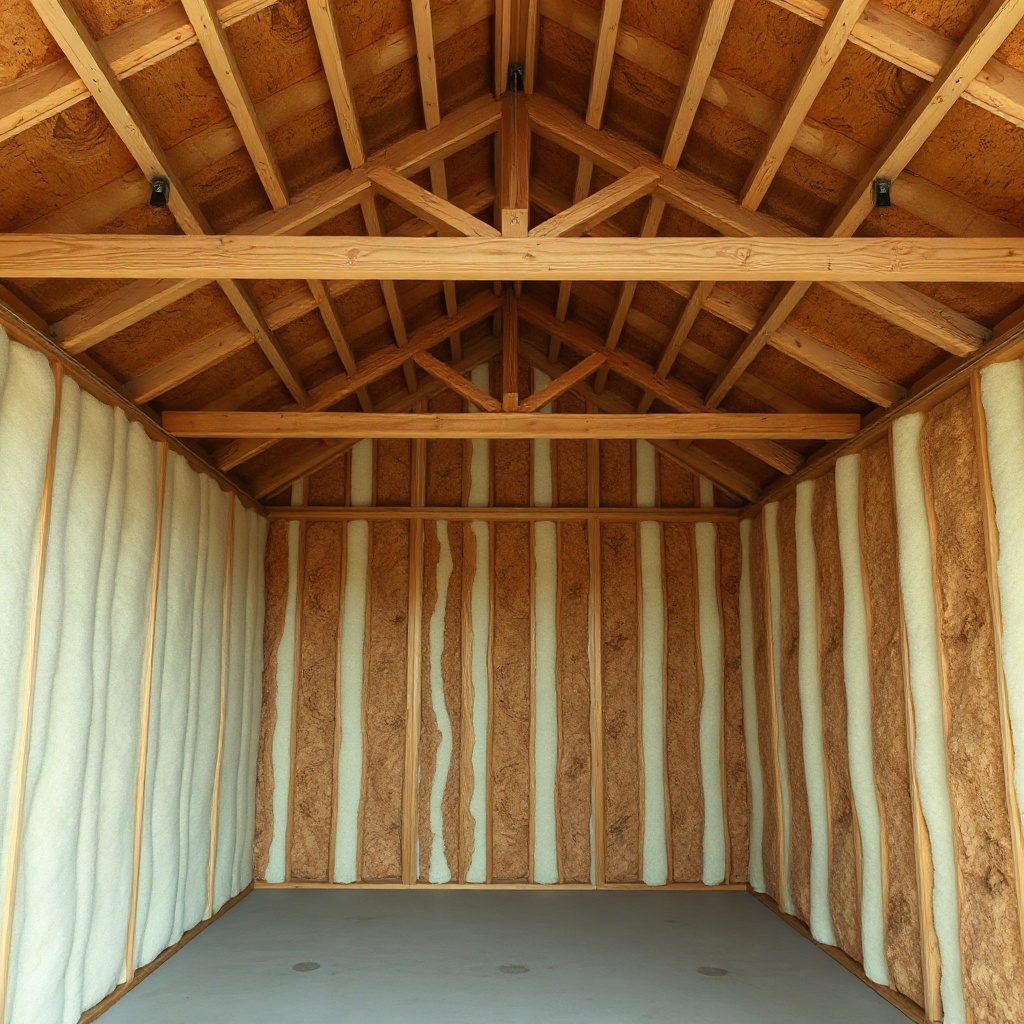
Blown-in insulation—typically cellulose or fiberglass loose-fill—is the go-to choice for ceiling applications in pole barns. For a 40×60 building, you have roughly 2,400 square feet of ceiling area. At R-38 (common for roofs), you’d need about 6-7 inches of blown-in fiberglass or 9-10 inches of cellulose.
- Cost (materials only): Cellulose runs roughly £0.50–£0.70 per square foot at R-38; fiberglass loose-fill about £0.60–£0.90 per square foot.
- Installation: Requires a blowing machine (rental ~£60/day) and a helper to feed material. Best done after ceiling sheathing is installed but before any interior finish.
- Thermal performance: Cellulose offers R-3.2 to R-3.8 per inch; fiberglass loose-fill R-2.2 to R-2.7 per inch. Cellulose has better air-sealing properties due to density.
- Moisture management: Blown-in cellulose can settle over time if not properly installed, but modern borate-treated varieties resist mould and pests.
For a 40×60 ceiling, expect to pay £1,200–£2,100 for materials alone, plus labour if hiring a contractor (£1,500–£3,000 total installed). The key advantage is seamless coverage over irregular roof trusses and purlin spaces.
2. Can Faced Batt Insulation Work Well on Walls and Ceiling?
Faced fiberglass batts (with a kraft paper or foil vapour retarder) are a traditional choice for pole barn walls. For a Wick 40×60, you have about 2,880 square feet of wall area (if 12-foot walls). At R-21 (typical 2×6 wall cavity), a faced batt costs roughly £0.80–£1.20 per square foot.
Installation is DIY-friendly: staple the flanges to the face of studs or purlins. However, batts require careful cutting around windows, doors, and braces. On walls, they perform well when compressed slightly—never packed tight, as that reduces R-value.
For ceiling use, faced batts are less common because they sag over time if not supported by strapping or a furring strip. In a 40×60 truss roof (with a 4:12 or steeper pitch), batts can be laid between purlins but require netting or wiring to hold them in place. Expect costs of £2,300–£3,500 for materials covering all walls and ceiling, plus labour if hiring out.
One downside: faced batts leave gaps around electrical boxes and braces, creating thermal bridging. This is especially problematic in metal-clad buildings where condensation forms on uninsulated metal.
3. Which Option Provides Better Moisture Control for a Wick 40×60?
Moisture is the enemy of any pole barn. Condensation forms when warm, humid air hits cold metal panels. Here’s how the two insulation types stack up:
| Factor | Blown-In Cellulose/Fiberglass | Faced Batt Fiberglass |
|---|---|---|
| Vapour retarder | None built-in (requires separate poly sheet on warm side) | Kraft or foil facing provides built-in retarder |
| Air infiltration resistance | Excellent—fills all voids and around penetrations | Moderate—gaps remain at studs, braces, outlets |
| Condensation risk | Low if properly sealed with vapour barrier on warm side | Moderate—faced side must be toward interior to work |
| Pest/mould resistance | Cellulose treated with borates is highly resistant; fiberglass is not | Fiberglass is not pest-proof; paper facing can mould if wet |
| Installation in ceiling | Excellent—seals around truss webs and purlins | Fair—requires support netting; gaps around chords |
For a 40×60 building in a humid climate (e.g., Ohio or Pennsylvania), blown-in cellulose with a 6-mil poly vapour barrier on the interior side is often superior to faced batts, which can trap moisture against steel if the facing is on the wrong side. Always install vapour barrier on the warm-in-winter side of the insulation.
4. What About Cost Comparison for a Complete 40×60 Install?
Let’s break down total project costs for a typical 40×60 pole barn with 12-foot walls and a pitched truss roof (R-38 ceiling, R-21 walls):
- Blown-in (ceilings + walls): Ceiling: £1,500–£2,100 (R-38 cellulose); walls: £1,800–£2,500 (R-21 dense pack); total installed: £3,300–£4,600. Requires separate vapour barrier: £200–£400 for poly.
- Faced batts (ceilings + walls): Ceiling: £2,000–£2,800 (R-38 batts with netting); walls: £1,800–£2,400 (R-21 batts); total installed: £3,800–£5,200. Includes integrated vapour retarder.
- Labour savings: Blown-in requires professional install for dense-pack walls, but DIY ceiling is doable. Batts are easier for DIY walls but tricky for ceilings.
Consider also that blown-in cellulose weighs more (about 1.5–2.0 lbs/ft³ vs 0.5–0.8 for batts), which may affect roof truss loading if your Wick 40×60 trusses are spaced 4–6 feet apart. Check engineering specs for your specific building before choosing.
5. Which Insulation Works Better with Other Building Features?
Your insulation choice should align with planned upgrades. For example, if you’re adding a sliding door or roll-up door, blown-in insulation around door headers is easier to retrofit than batts. Also, if you’re concerned about leaning walls from wind pressure, blown-in insulation adds some structural rigidity by filling all cavities.
For a building with vinyl siding (which can trap moisture), faced batts with foil facing can provide a radiant barrier effect—but only if installed with the foil toward an air gap. This is more complex but can reduce cooling costs by 10–15% in hot summers. Blown-in doesn’t offer this advantage unless paired with a separate radiant barrier product.
Finally, if you plan to install wind-bracing cables or rods, blown-in insulation covers them completely, while batts must be cut around them, creating gaps.
6. What Do Owners Say About Their Wick 40×60 After Insulating?
We spoke with several owners who insulated their Wick 40×60 buildings:
- John from Kentucky (workshop): “I went with blown-in cellulose for the ceiling and faced batts on walls. The cellulose settled about 2 inches in the first year, so I had to top it off. But the building stays 15°F warmer in winter than my neighbour’s with just batts.”
- Maria from Ohio (horse stable): “We used faced batts everywhere because we had interior roof panel. After two wet winters, we got mould on some batts near the eaves. Should’ve used blown-in with better vapour control.”
- Dave from Michigan (heated garage): “I hired a crew for dense-pack cellulose in walls and loose-fill in ceiling. Total cost was £4,200. My heating bills for the 40×60 are under £300/year—worth every penny.”
- Linda from Pennsylvania (storage): “Cheaped out with batts on the ceiling. Now I have to redo it because of sagging. Go with blown-in for any horizontal space.”
The consensus: blown-in cellulose (ceiling) and dense-pack cellulose (walls) outperform batts for moisture control and thermal uniformity, but batts are acceptable for vertical walls if installed correctly with vapour barrier on the warm side.
Frequently Asked Questions
Q1: Can I install blown-in insulation myself in a Wick 40×60 ceiling?
Yes, you can rent a blower from a home improvement store for about £60/day. However, achieving even R-values and proper depth requires a helper and careful work. For walls, dense-pack installation usually requires a professional due to high pressure needed.
Q2: Is faced batt insulation safe for metal pole barns?
Yes, but you must ensure the facing (vapour retarder) faces the interior conditioned space. If the facing touches the metal skin, condensation can form between them, leading to corrosion. Always leave an air gap or use unfaced batts with a separate vapour barrier.
Q3: What R-value is recommended for a 40×60 in a cold climate?
For Zone 5-6 (much of UK and northern US), aim for R-38 to R-49 in the ceiling and R-21 to R-30 in walls. A Wick 40×60 with 2×6 wall framing can handle R-21 batts; blown-in can achieve R-30 with deeper cavities.
Q4: Does blown-in cellulose settle over time?
Yes, loose-fill cellulose can settle 5–10% over the first year. This reduces R-value slightly. High-quality installation with proper density (around 2.5 lbs/ft³) minimises settling. You may need to top off after the first winter.
Q5: Can I combine blown-in ceiling with batt walls?
Absolutely. This is a common approach: blown-in for the attic-like ceiling space (where it seals well), and faced batts for easily accessible walls. Just ensure vapour barriers are compatible and continuous at the wall-ceiling junction.
Q6: How does insulation affect door installation for a Wick 40×60?
Proper insulation around sliding or roll-up doors prevents drafts. Blown-in insulation is easier to retrofit around door tracks and headers. Batts must be cut precisely to avoid gaps. Also, a well-insulated building reduces load on heaters near doors.