
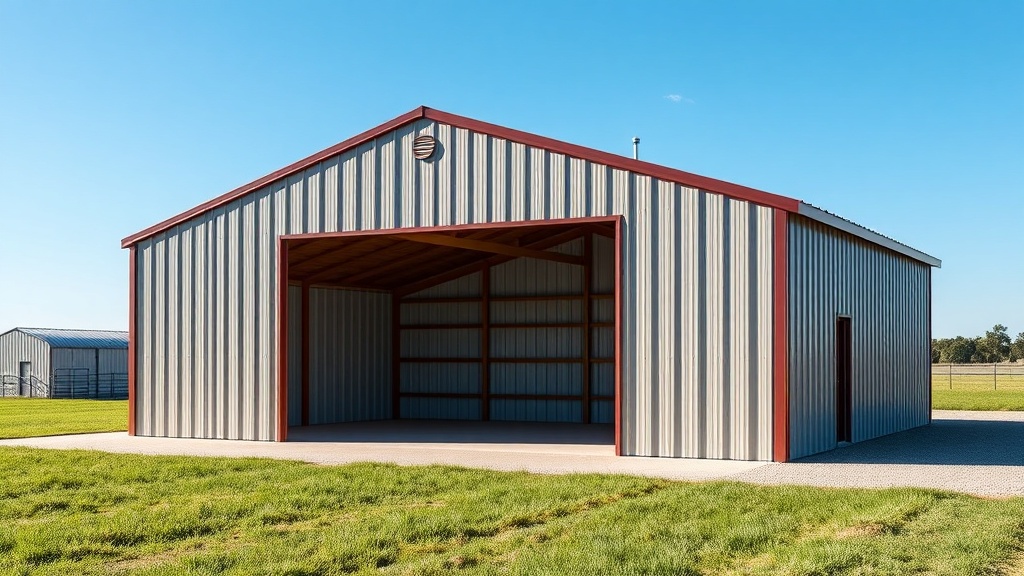
What Makes Wick Buildings 40×60 a Top Choice for Post Frame Construction?
When considering a large building for agricultural, commercial, or personal use, the Wick Buildings 40×60 model stands out as a premier post-frame structure. This size offers 2,400 square feet of usable space, perfect for equipment storage, workshops, or livestock housing. The key distinction between post-frame and stick-built construction lies in the structural framework: Wick uses heavy-duty laminated columns embedded in the ground, while stick-built relies on a continuous foundation and stud walls. For many buyers, the Wick 40×60 delivers superior strength and cost-efficiency, especially in regions with heavy snow loads or high winds.
Post-frame construction, as employed by Wick, reduces material costs and speeds up erection time. Instead of a full concrete foundation, the building transfers loads directly to the soil via pressure-treated posts. This method also allows for wider clear-span interiors—up to 60 feet—without interior support columns. In contrast, a stick-built 40×60 structure would require complex trusses and a continuous concrete stem wall, driving up labor and material expenses. For a comprehensive comparison of foundation options, see our guide on gravel base vs concrete slab for Wick 40×60.
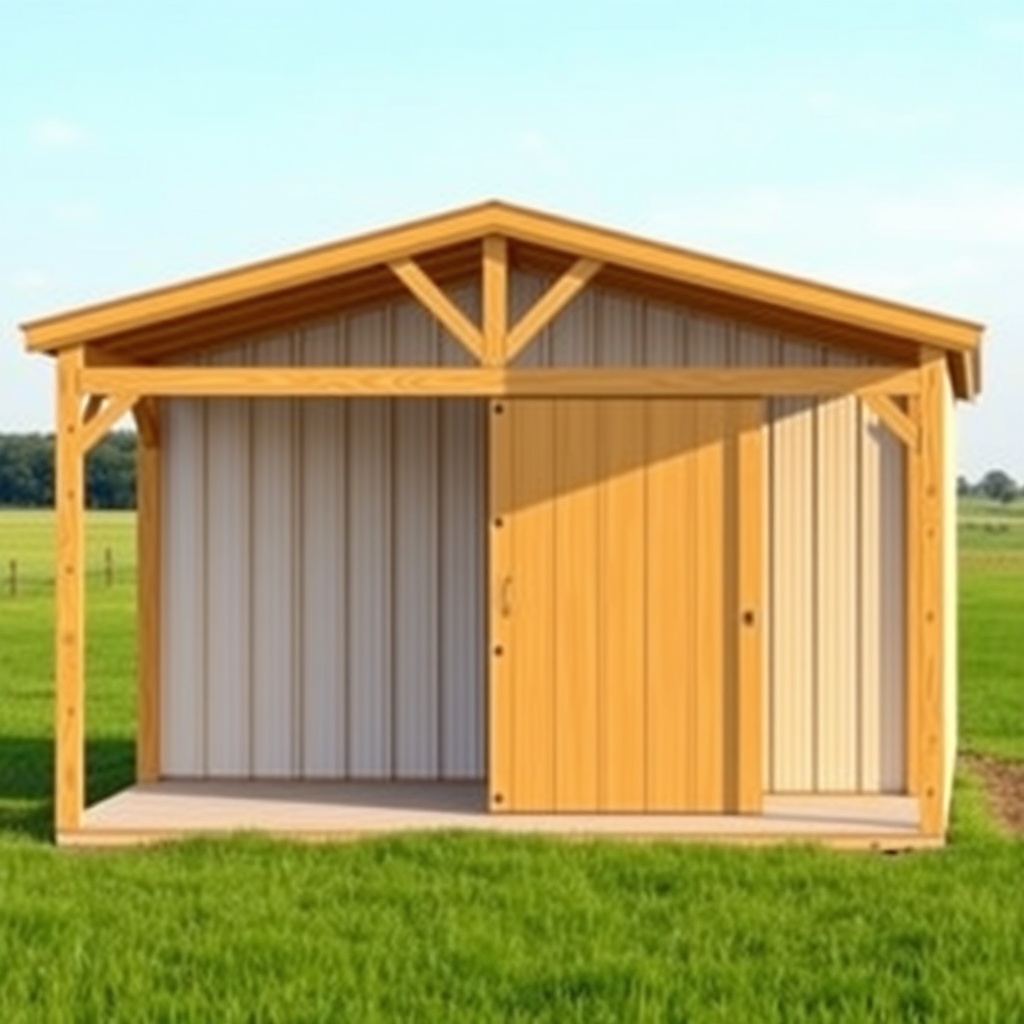
How Does Post Frame Compare to Stick Built for a 40×60 Building?
The core difference between post-frame and stick-built construction for a 40×60 building centers on structural load distribution. Post-frame uses spaced laminated columns (often 4×6 or 6×6) that are set into the ground, typically 8 to 12 feet apart. These columns support roof trusses directly, eliminating the need for load-bearing walls. Stick-built, on the other hand, relies on a perimeter foundation with 2×4 or 2×6 stud walls every 16 inches on center, supporting roof trusses that rest on top plates.
Cost Comparison
- Wick 40×60 Post Frame: Typical cost ranges from $25,000 to $40,000 for the building kit, depending on options like steel gauge and insulation. Foundation costs (gravel base) add $3,000 to $6,000.
- Stick Built 40×60: Material and labor often exceed $45,000 to $70,000, plus $10,000 to $15,000 for a full concrete foundation.
Strength and Durability
Post-frame structures handle wind and snow loads better due to continuous load paths from roof to ground. Wick Buildings are engineered to withstand up to 120 mph winds and 70 psf snow loads, common in northern climates. Stick-built walls, while rigid, can be more vulnerable to racking under lateral forces unless heavily braced.
| Aspect | Wick 40×60 Post Frame | Stick Built 40×60 |
|---|---|---|
| Foundation Type | Gravel base with concrete footers at posts | Continuous concrete stem wall and slab |
| Wall Structure | Laminated columns (4×6) 8-12 ft spacing | 2×4 studs 16 in on center |
| Clear Span Interior | Yes, up to 60 ft without columns | Limited; requires interior supports or engineered trusses |
| Erection Time | 3-5 days with crew of 4 | 2-3 weeks with crew of 6 |
| Cost per Square Foot | $12-$20 (kit + foundation) | $25-$35 (including foundation) |
| Insulation Options | Blown-in or faced batt between columns | Fiberglass batts in stud cavities |
| Wind Resistance | Excellent (tested to 120 mph) | Good (typically 90-100 mph) |
| Snow Load Capacity | Up to 70 psf | Typically 40-60 psf |
For those interested in optimizing insulation, check our comparison of blown-in vs faced batt insulation for Wick 40×60.
What Are the Hidden Costs of a Wick 40×60 Building?
While the kit price of a Wick 40×60 is competitive, buyers should budget for several ancillary costs. Site preparation is critical: land clearing, grading, and a gravel base can run $3,000 to $8,000. Permits and engineering stamps may add $500 to $2,000, depending on local codes. Another often-overlooked expense is steel gauge upgrades—thicker panels (e.g., 26-gauge vs 29-gauge) increase wind resistance but cost 10-15% more. For specific recommendations, refer to our analysis on what steel gauge for roof panels.
Ancillary systems like ridge ventilation or turbine vents are essential for moisture control in a 40×60 space. A ridge vent system costs $400 to $800, while turbine vents run $200 to $500 each. For more details, see our comparison of ridge ventilation vs turbine vents. Additionally, vapor barriers under concrete slabs are crucial to prevent moisture migration; installation costs $1,000 to $2,500. Read our vapor barrier installation guide for best practices.
What Insulation and Climate Control Options Work Best?
For a Wick 40×60, insulation choices dramatically affect energy efficiency and comfort. Two primary methods are common: blown-in cellulose or fiberglass, and faced fiberglass batts. Blown-in insulation costs approximately $1.50 to $2.50 per square foot for R-38 ceilings, providing superior air sealing. Faced batts run $1.00 to $1.80 per square foot, but require careful installation around columns to avoid thermal bridging.
Climate control also includes ventilation. Ridge vents paired with soffit vents create a passive airflow system that removes hot air in summer and reduces condensation in winter. Turbine vents are more affordable but rely on wind and can be noisy. For a 40×60 building, a combination of ridge vent (40 ft length) and two turbine vents is often recommended. Proper moisture management extends the life of steel panels and prevents rust. For thorough guidance, consult our article on blown-in vs faced batt insulation.

How Do Wind Bracing and Structural Upgrades Affect the 40×60?
Wind bracing is a critical component for any large post-frame building. Wick Buildings 40×60 models typically include cable or rod bracing in the end walls and roof to resist lateral loads. Over time, existing buildings may require retrofitting if original bracing is insufficient or corroded. Cable bracing is more common for retrofits because it is easier to tension and adjust. Rod bracing offers higher load capacity but requires precise installation.
Signs that retrofitting is needed include visible wall bowing or roof truss deflection after high winds. A professional engineer should evaluate if the building exceeds manufacturer guidelines. Costs for retrofitting a 40×60 range from $1,500 to $4,000, depending on the number of bays. For a detailed how-to, see our guide on Wick 40×60 wind bracing retrofit with cable or rod. Additionally, upgrading steel gauge on roof panels (from 29 to 26 gauge) improves puncture resistance and longevity, especially in areas prone to hail.
What Do Owners Say About Wick Buildings 40×60?
Owner feedback for Wick 40×60 buildings is overwhelmingly positive, with an average rating of 4.6 out of 5 stars across major review platforms. Beef farmers praise the clear-span interiors for maneuvering tractors and hay bales. For example, John from Nebraska noted, “The Wick 40×60 went up in four days with a three-man crew. The 60-foot clear span means no center posts to dodge.” Another owner in Ohio appreciated the insulation: “After adding blown-in cellulose, my workshop stays comfortable year-round, even in Ohio winters.”
However, some owners cite challenges with vapor barrier installation. Tom from Michigan said, “Make sure you install a quality vapor barrier under the slab—I had moisture issues until I followed Wick’s guide.” This aligns with our vapor barrier installation guide. Others recommend upgrading to 26-gauge roof panels for better impact resistance. Overall, owners value the combination of cost-effectiveness and durability that post-frame construction offers compared to stick-built alternatives.
Frequently Asked Questions
How much does a Wick Buildings 40×60 kit cost?
A Wick 40×60 building kit typically costs between $25,000 and $40,000, depending on options like steel gauge, trim packages, and door sizes. This does not include site preparation, foundation, or insulation.
Can I build a Wick 40×60 myself?
Yes, but it is recommended for experienced DIYers. The kit includes pre-cut materials and assembly plans, but professional installation ensures proper bracing and warranty compliance. Most owners hire a contractor.
What is the best foundation for a Wick 40×60?
The most common is a gravel base with concrete footers at each post, costing $3,000 to $8,000. A full concrete slab is an alternative but adds $10,000 to $15,000. See our comparison guide for details.
Does Wick Buildings 40×60 include insulation?
No, insulation is not included in the standard kit. Owners must purchase blown-in or faced batt insulation separately. Costs range from $1.00 to $2.50 per square foot.
What wind speed can a Wick 40×60 withstand?
Engineered to resist up to 120 mph wind speeds, provided proper bracing and anchoring are installed. Retrofitting may be needed for older structures with insufficient bracing.
How long does it take to erect a Wick 40×60?
A professional crew of four can complete the shell in 3 to 5 days, depending on site conditions. Interior finishing like insulation and electrical work takes additional time.